Is Idex 3D Printer suitable for this project? Start by examining RFQ preparation for shortlisting
Shortlisting an idex 3d printer should begin with the project, not with a feature list. Operations teams need to define the parts, materials, workspace, and workflow that the RFQ must address. The goal is not to declare a machine suitable from a product page alone. It is to create a clear comparison between the work required and the evidence available.

1. Define the use case and constraints
Start by describing the output in practical terms. Record the approximate part size, expected repetition, model complexity, and whether two materials or two copies may be used in the same job. Also note the available floor or bench space, operator responsibilities, and any limits on the planned installation. These details help separate a genuine requirement from a preference.
Build volume deserves early attention. The official E2 page states that desktop 3D printers have a smaller build volume and are suited to projects whose sizing requirements will remain small over the long term. That statement can inform an RFQ, but it should not become a general conclusion about every project. If the work may grow beyond small parts, ask suppliers to address that future requirement directly.
Next, identify the operating pattern. A need for repeated identical parts is different from a need to produce models with different materials or support arrangements. The E2 page describes Duplication Mode as synchronized printing with both extruders, producing a model and an exact copy at the same time. In an RFQ, treat this as a stated operating mode to discuss, rather than as a promise about the total output of your own workflow.
2. Map page evidence to each requirement
Use a simple evidence register. For every requirement, write the product-page statement, the question it helps answer, and the point that remains open. This keeps confirmed information separate from assumptions. For example, the E2 page lists FFF, dual extrusion, improved cooling, and interchangeable hot ends. Those are useful entries for a technical comparison, but they do not by themselves establish suitability for a particular material, part, or production schedule.
For teams assessing idex 3d printing, the print-head detail is a concrete example of how to frame the RFQ. The E2 page states that spare Easy Swap Print Heads can be prepared with hardened nozzles and different nozzle sizes, including 0.4, 0.6, and 0.8, which can be switched in a few steps before returning to printing. Use that page-supported statement to ask which head and nozzle arrangement matches the intended work. Do not extend it into an unsupported claim about performance, service life, or application suitability.
- Define part size, repetition, materials, workspace, and operator responsibilities before comparing products.
- Map listed functions such as FFF, dual extrusion, improved cooling, and interchangeable hot ends to specific requirements.
- Ask how Duplication Mode applies to the planned workflow when producing a model and an exact copy at the same time.
- Record nozzle, slicing-profile, and part-removal questions as separate RFQ lines tied to the intended operating tasks.
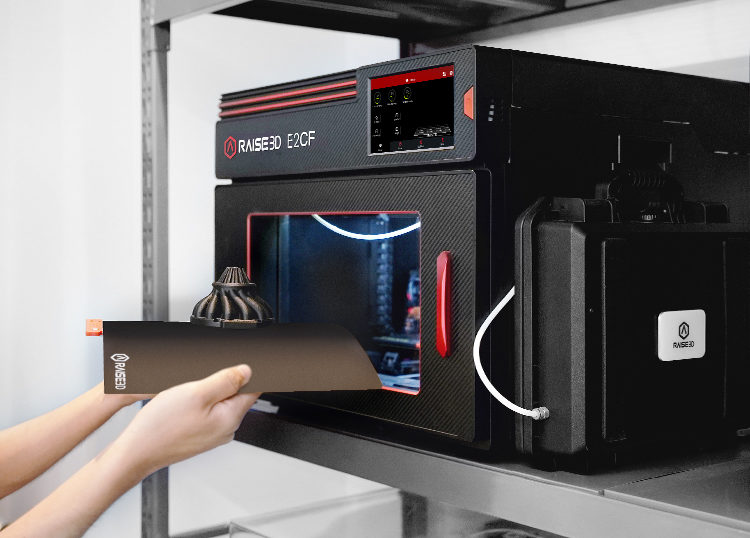
Software and part removal also belong in the evidence register when they affect daily handling. The page states that ideaMaker Library provides slicing profiles for various filaments, including Raise3D filaments and OFP-certified filaments, to simplify parameter settings. It also describes the E2 BuildTak FlexPlate as a flexible plate that bends for easier part removal and can regain its original shape. In the RFQ, connect these details to operator tasks: profile selection, setup, removal, and preparation for the next job.
3. Turn open points into supplier questions
An effective RFQ does not only repeat advertised features. It asks for a response in the context of the planned work. Request a clear description of how the proposed configuration addresses the required part size, the intended print mode, and the materials named in the specification. Ask the supplier to identify any assumptions behind its response. This makes competing replies easier to compare without treating marketing language as a technical acceptance criterion.
Keep questions narrow and traceable. If the requirement concerns nozzle changes, ask the supplier to state the relevant configuration and operating steps. If it concerns repeated copies, ask whether the quoted workflow uses Duplication Mode and what conditions apply. If it concerns software setup, ask which profiles in the stated library correspond to the proposed materials. Each answer should attach to one RFQ line, so the shortlist remains defensible.
Also separate selection questions from implementation questions. Selection questions determine whether the product belongs on the shortlist. Implementation questions cover placement, training, consumables, workflow ownership, and the information needed before an order. The available page evidence can support a focused technical discussion, but it should not be used to fill gaps about certification, safety, availability, or results that the page does not establish.
4. Summarize a defensible next step
At the end of the review, create a short decision record. List the project requirements, the directly supported product evidence, the unresolved supplier questions, and the reason for either advancing or excluding the candidate. Mark assumptions separately. This record helps another stakeholder understand the decision without reconstructing the entire research process.
The right conclusion may be conditional. A desktop format may fit a project that will remain focused on smaller parts, while a larger or changing requirement needs a different discussion. Likewise, dual-extrusion functions, interchangeable hot ends, slicing profiles, and a flexible build plate may be relevant evidence, but their importance depends on the intended workflow. A disciplined RFQ keeps that connection visible.
Use the shortlist as a starting point for a technical response, not as a substitute for one. When the requirements, page evidence, and open questions are recorded together, operations teams can judge whether Raise3D belongs in the next procurement stage without overstating what the available information proves.