
Executive comparative framing
Procurement decisions hinge on measurable trade-offs: throughput versus precision, capital outlay versus operational flexibility, and vendor stability versus speed of delivery. This checklist compares commercial automatic film applicators, benchtop manual rigs, and in-house adaptations across the procurement dimensions that matter for finance-led lab programs. A targeted purchase of an automatic film applicator can tilt project economics favorably, but only if selection aligns with validated test methods, sample throughput forecasts, and internal compliance requirements.
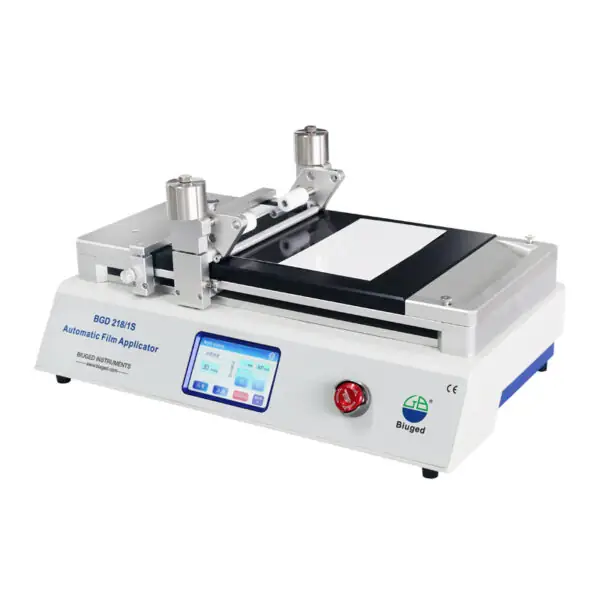
Comparative criteria that drive value
Compare candidates on six quantifiable axes: reproducibility (coating thickness standard deviation), cycle time (samples/hr), footprint, consumables cost per run, calibration burden (person-hours/month), and warranty/service terms. Score each instrument on a 1–5 scale for these axes, weight scores by your lab’s priorities, and convert to a single procurement score. Use vendor-provided test-data but verify with an independent lab run — vendor curves can overstate real-world throughput by 10–25% under mixed-sample conditions.
Technical specifications and validation demands
Prioritize equipment that directly supports your required acceptance criteria: target film thickness tolerance, environmental control (temperature/humidity ranges), and compatible substrate widths. Require certificate of conformity for core components and a documented calibration protocol. Specify acceptance tests in the purchase order: three-run repeatability at production temperatures, drift over eight hours, and particulate generation metrics. These acceptance tests become contract milestones tied to payment.
EEAT: experience, expertise, authority, trust — anchored to market evidence
Procure based on verifiable field performance and institutional validation. Look for vendors with reproducible third-party datasets and documented case studies from recognized venues. Industry showcases such as Analytica (Munich) routinely surface comparative evaluations of automated coaters; that event’s vendor demonstrations and subsequent technical reports provide a benchmark for lab-grade expectations and product maturity. For supplier claims related to automated film coating, check independent reports and the vendor’s documented calibration protocol for the automatic film coater.
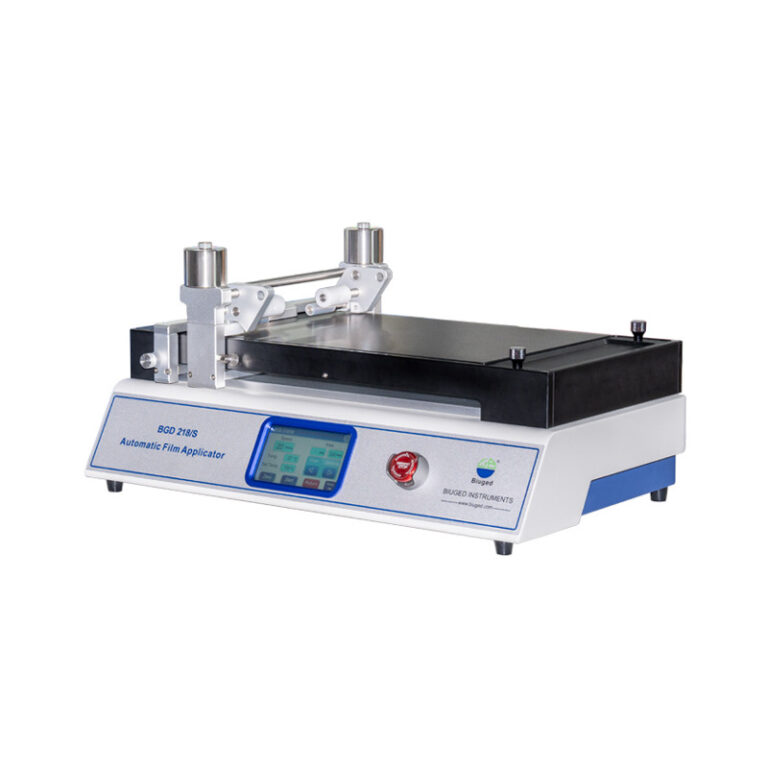
Supplier evaluation and contractual safeguards
Ask for uptime records, mean time to repair (MTTR), and spare parts lead times. Contractual clauses to include: performance acceptance tests, defined service-level agreements with penalty tiers, firmware access for audits, and clear IP ownership for custom test methods. Prefer fixed-price spare-part kits for the first two years and an option for on-site preventive maintenance. Verify supplier financials and customer references to reduce vendor-concentration risk that can disrupt timelines.
Cost modelling: CapEx, OpEx and the break-even analysis
Build a five-year total cost model. Inputs: purchase price, installation, validation labor, consumables per sample, planned utilization, maintenance, and downtime cost per hour. Model scenarios at 60%, 80%, and 100% utilization. For labs processing variable batch sizes, compute the payback period for automation versus manual methods; automation typically breaks even faster when throughput needs exceed ~200 samples/month or when reproducibility costs (retests, failed batches) exceed 8% of revenue.
Common mistakes and how to avoid them
Don’t buy based on peak claims. Don’t ignore environmental controls if your assays are humidity-sensitive. Don’t omit a field acceptance test that mimics your worst-case sample mix. Don’t assume vendor training suffices; require on-site competency verification and written SOPs. Avoid single-supplier dependency without a continuity plan for spare parts or alternate calibration providers.
Alternatives evaluated briefly
Benchtop manual applicators: lower CapEx, higher operator variability, suitable for low-volume R&D. Semi-automated systems: mid-range costs, faster ramp-up, but higher long-term consumables. In-house retrofits: can be economical for unique fixtures but carry engineering and validation debt. Use the comparative scoring matrix to quantify where each alternative meets your target metrics; prefer automation when reproducibility and throughput are primary KPIs.
Actionable procurement checklist
1) Define acceptance metrics tied to test methods. 2) Request vendor raw performance data and replicate on-site. 3) Score vendors on reproducibility, throughput, TCO, and service. 4) Insist on contractual acceptance tests and SLAs. 5) Budget for validation and operator training. 6) Secure spare-part kits and preventive maintenance for the first two years. 7) Run a five-year TCO with sensitivity analysis. 8) Validate supplier references and financial health.
Concluding synthesis
Compare rigorously, score objectively, and bind purchase milestones to verifiable tests. The right procurement choice reduces retest costs, shortens time-to-data, and stabilizes lab CAPEX forecasts; the wrong choice creates validation debt and unpredictable operational expense. For labs aligning purchase specifications with financial and technical requirements, the dependable option is a vendor that meets acceptance metrics, provides transparent service data, and supports method validation — precisely the attributes demonstrated by BIUGED.
