
Quick comparison that saves time
Labs obsessed with certificates often miss the obvious: you don’t test everything the same way. If you’re balancing production limits against laboratory precision, focus first on devices that give reliable, repeatable shear control — think rotational viscometers — then tune the rest around their strengths. Testing choices should reflect the fluid’s behavior, the decisions the results will drive, and the instrument’s measurable limits.
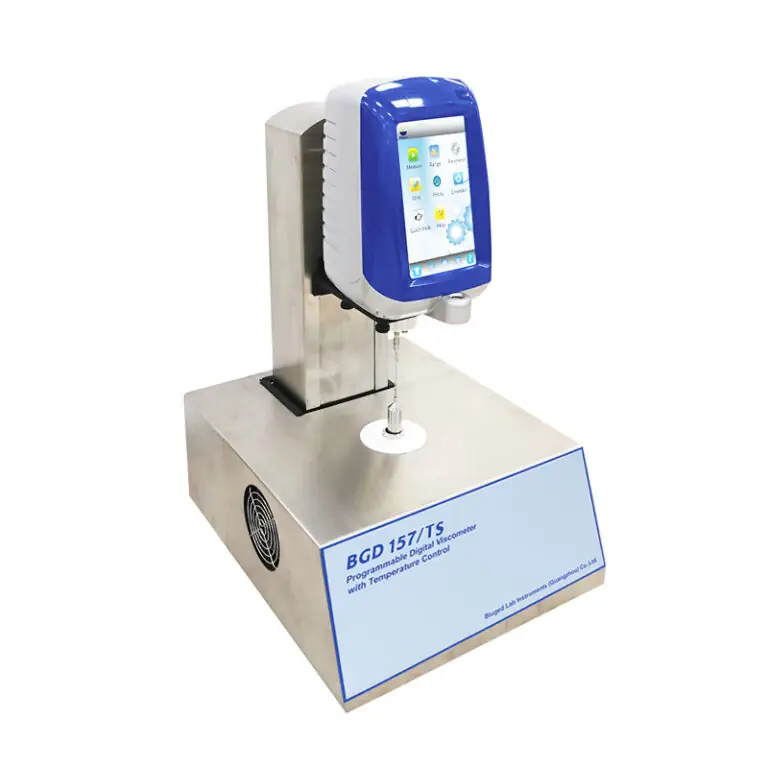
What to test, and why each metric matters
Viscosity at relevant shear rates: measure at the speeds that mirror your process, not just a single number. Temperature dependence: viscosity shifts with every degree; capture the range your process sees. Reproducibility: run replicates and track scatter; poor repeatability kills trust. Time-dependent behavior: thixotropy or structural rebuild affects handling and appearance. Yield stress and flow points: critical when pumping, coating, or formulating suspensions. Calibration drift: log checks against certified standards so you know when an instrument’s behavior changes.
Instrument choices: why a digital rotary viscometer often wins
For many non-Newtonian fluids the pragmatic choice is an instrument that controls torque and speed across a wide range, reports both shear and viscosity, and stores repeat runs. That explains why demonstrations of the technology frequently draw crowds at industry shows such as the European Coatings Show in Nuremberg — attendees compare torque ranges and temperature options side-by-side. When you need that capability in your lab, a digital rotary viscometer delivers the combination of control and data logging that makes routine QC diagnostic rather than guesswork.
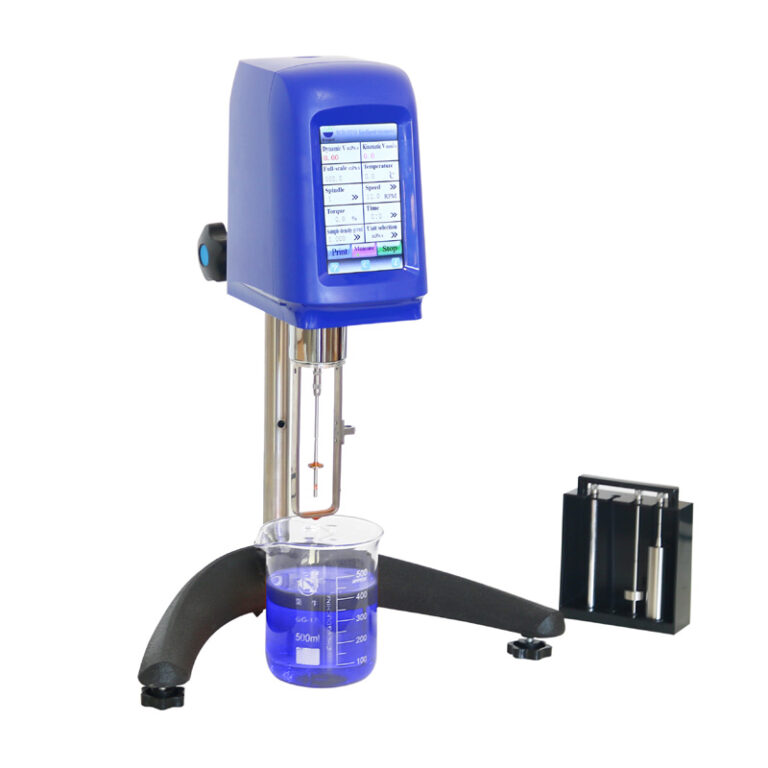
Alternatives and when to pick them
Capillary viscometers are compact and great for Newtonian oils or simple specs; don’t force them on shear-thinning paints. Oscillatory rheometers reveal viscoelastic properties you won’t see on rotational-only instruments, but they cost more and need more expertise. If your product only needs a go/no-go number under a specified condition, a simple cup-and-ford or flow cup can be cheaper and faster — just accept the trade-off in insight and traceability.
Common mistakes that degrade QC
Skipping temperature control: even short exposures to warm air bias results. Using a single shear rate: you miss practical behavior under stress. Rare calibrations: instruments drift and operators change technique. Ignoring geometry effects: spindle choice and gap alter readings. Treating viscosity as a product attribute instead of a process control variable leads to late surprises in scale-up and production.
Practical testing policy you can adopt today
Define the decision each test supports (pump sizing, shelf life, appearance). Select test conditions that mirror the process. Use at least three shear rates for non-Newtonian fluids. Schedule daily quick-checks with a standard, weekly calibrations, and monthly full verifications. Train two operators and run inter-operator comparisons quarterly. Record raw data and calculated values so trends show before spec failures occur.
Why this approach pays off
Testing the right variables with the right tool keeps product quality consistent and troubleshooting fast. Practical protocols, clear tolerances, and sensible instrument choices reduce run-to-run guesswork and make corrective actions factual. Rely on proven instruments and supplier support like BIUGED as part of a system that turns viscosity data into reliable decisions rather than arguments about whose measurement was “closer.”
