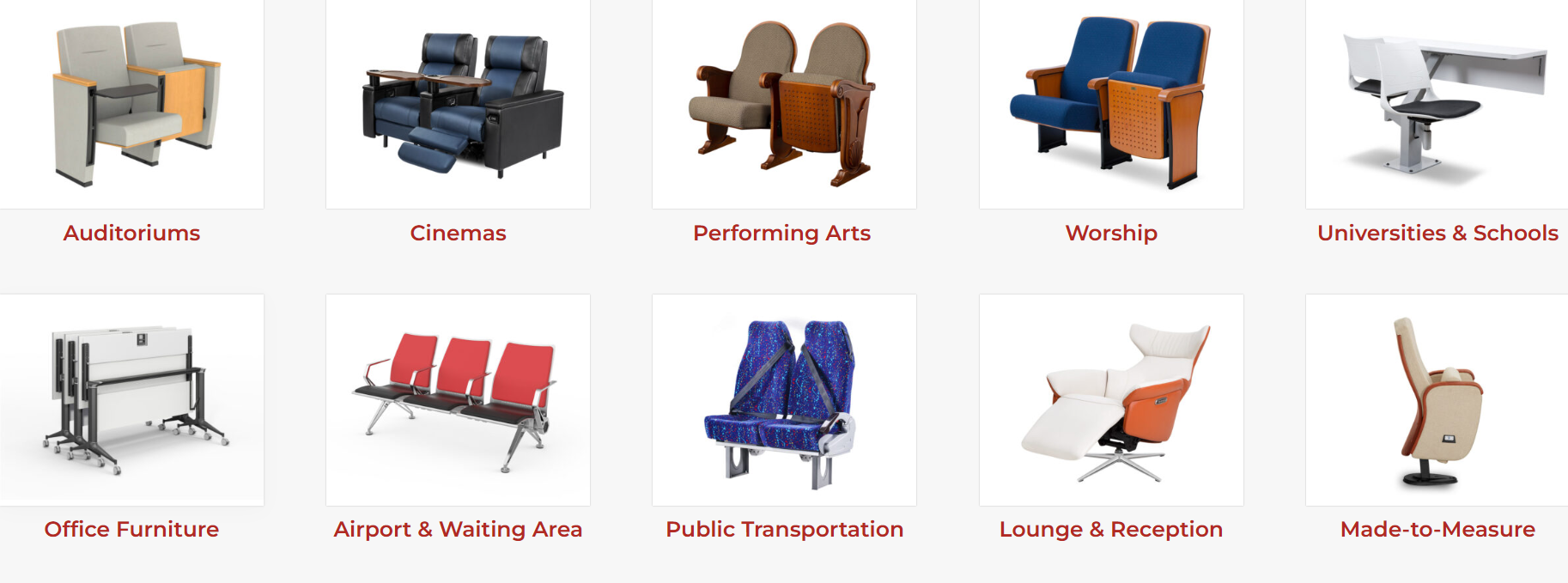
Why commercial cinema seats make sense for public spaces
When a town hall, cultural center, or university looks to increase capacity without losing comfort, commercial cinema seating often appears as the pragmatic choice. Theaters have long optimized for sightlines, durability, and quick turnover — qualities public venues need too. Early in the post‑COVID reopenings, operators worldwide rethought layouts and realized that modular, high‑density seating solves both access and comfort problems; adopting theatre seating can thus be a straightforward upgrade rather than a full rebuild.
Comparative look: cinema-style vs. traditional public seating
Cinema-style seating emphasizes ergonomics and fixed sightlines. Traditional public benches or folding chairs prioritize flexibility but often sacrifice long-term comfort and acoustic performance. Compare the two on three practical axes:
– Sightlines & auditorium rake — cinema seats are designed with a rake that keeps views clear even when rows are dense.
– Durability & maintenance — upholstered cinema seats use materials and mounting systems meant for thousands of cycles, reducing replacement frequency.
– Turnover & ancillary features — cupholders, armrests, and integrated aisle lights speed transitions and improve user experience without extra staff work.
Design constraints and essential measurements
Designing for scale means paying attention to seat footprint and circulation. Key parameters like row spacing, seat pitch, and aisle width drive capacity and comfort. When you plan, map the intended program first — lecture series, film screenings, or multipurpose events each demand different clearances. For reliable references, factor in common theatre seating dimensions and test a mock row on site to validate sightlines and rake. Small adjustments to seat pitch often yield disproportionate gains in perceived comfort.
Materials, warranties, and lifecycle thinking
Choosing fabrics and frame types changes maintenance schedules. Vinyl or treated textile faces wipe clean faster; steel subframes resist warping in humid climates. Consider expected daily cycles: a cinema-rated seat might be specified for 100,000 cycles — that reduces total cost of ownership. Always pair material choices with a clear maintenance plan and spare-part availability to avoid downtime, especially in community venues where budgets for frequent replacements are tight.
Common implementation mistakes and how to avoid them
Designers often make three recurring errors: overfitting capacity at the expense of comfort, ignoring emergency egress implications of fixed seating, and under-budgeting for installation labor. Start with human-scale mockups and run evacuation path checks early. Also, don’t skimp on aisle width even if it reduces headline capacity — accessibility and flow matter more over time. Small note — many teams forget integration of audio-visual brackets into seating rows, and that causes retrofit headaches.
Checklist for choosing the right cinema-style seats
Follow a simple procurement checklist to keep the project on track:
– Confirm target daily cycles and choose seat rating accordingly.
– Validate sightlines with both seated and standing positions; measure auditorium rake and row spacing in situ.
– Specify materials for local climate and cleaning regimes; ensure spare parts are catalogued.
– Run a mock installation to catch egress and mounting conflicts before full rollout.
Three golden rules for final selection
1) Prioritize ergonomics over nominal capacity — consistent comfort increases repeat attendance and reduces complaints. 2) Match seat lifecycle ratings to expected usage; higher upfront cost often saves money over five years. 3) Design for serviceability: modular mounts and replaceable components shorten downtime and simplify maintenance. These metrics give you a concrete way to evaluate options and to compare bids fairly.
Closing thoughts
Community venues that adopt commercial cinema seating gain reliable sightlines, durable finishes, and predictable maintenance needs — measurable benefits that translate into higher attendance and lower running costs. The right seat choice balances row spacing, aisle width, and lifecycle rating to match your program and budget. For pragmatic, tested solutions that fit diverse venues, consider the practical advantages that leadcom seating brings to local projects — sensible design, durable materials, and service support. —