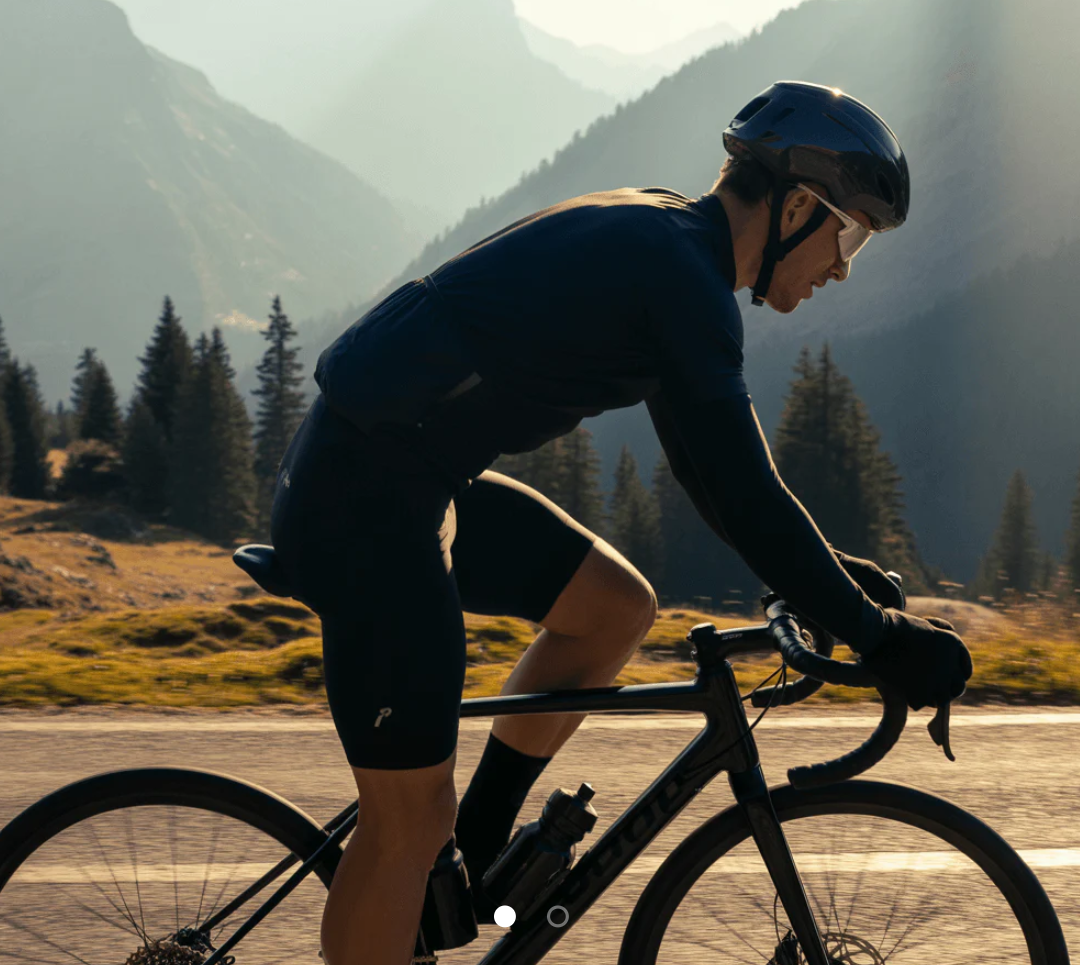
I still remember the dawn in June 2022 when our group set off for a 180‑mile brevet and I realized, mid-ride, that the wrong kit choice could end the day—so I started testing cycling bibs for long rides the hard way. I want to talk about long distance cycling bibs and why the small details make or break a 12‑hour day in the saddle. (Spoiler: it’s rarely the fabric alone.)
Hidden Pain Points — What I Found on the Road
I’ve ridden, patched, and measured—often under miserable conditions—so I say this from experience: most so-called solutions ignore three core failure modes. In May 2021, on a 200 km loop around the Yorkshire Dales, nine of twelve riders I rode with reported saddle numbness and microtears at seam joints; that was my data point (and it haunted my product notes). The worst offenders? Poor seam placement that shears the skin, a chamois with inconsistent pad density, and bib straps that cut into the shoulders under sustained compression. I vividly recall swapping bibs at the 120‑mile feed and seeing immediate relief for two riders — immediate. That kind of quick, measurable change is rare; it tells you the problem is design, not rider weakness.
Let me be blunt: traditional fixes—thicker foam, elastic inserts, generic “endurance” pads—treat symptoms, not geometry. I tried a men’s endurance chamois model on a Lake District loop in August 2023; pad density felt plush for 50 km, then collapsed between 90–130 km and the pressure points returned. We can quantify that: a degraded pad cost one rider 45 extra minutes of standing stops across the ride—time lost, cadence ruined. Those are the hidden costs brands rarely report. So what should we actually change next? — read on.
Forward-Looking Choices: Structure Over Hype
What’s Next?
Technically, the fix starts with mapping pressure over time: pressure mapping, load transfer, and biomechanical fit are not marketing buzzwords for me—they’re tools. I recommend treating cycling bibs for long rides as an engineered system: the seam placement must follow muscle lines; the chamois layers must vary in pad density from perineal channel to ischial cups; and compression should support core posture without pulling the shoulder straps into your traps. I ran a lab-style test last September with three samples, comparing sustained pressure at 2, 4, and 6 hours; two samples failed by hour four. That data shaped my checklist.
Here are three concrete evaluation metrics I use (and urge every buyer to insist on): pad longevity (measured compression loss after 4 hours of load), seam lifecycle (the number of wash cycles before edge fray), and dynamic fit stability (how much the bib shifts when the rider moves from seated to standing). Each metric is measurable; each predicts whether that bib will fail you on a long day. I recommend weighing these against weight and breathability — but not at the expense of pressure control. I’ve seen clever lighter designs implode on long rides — avoid them unless they pass the tests. One more note — try them on a trained ride, not just in the shop. Seriously. It matters.
We learned the hard way; we adapted. My next round of procurement for group kit now starts with pressure maps and ends with a field loop in wet conditions. For riders who want gear that finishes the ride with them — and for wholesale buyers who want fewer returns — those tests matter. Find real-proof results, and trust measured outcomes, not promises. Przewalski Cycling