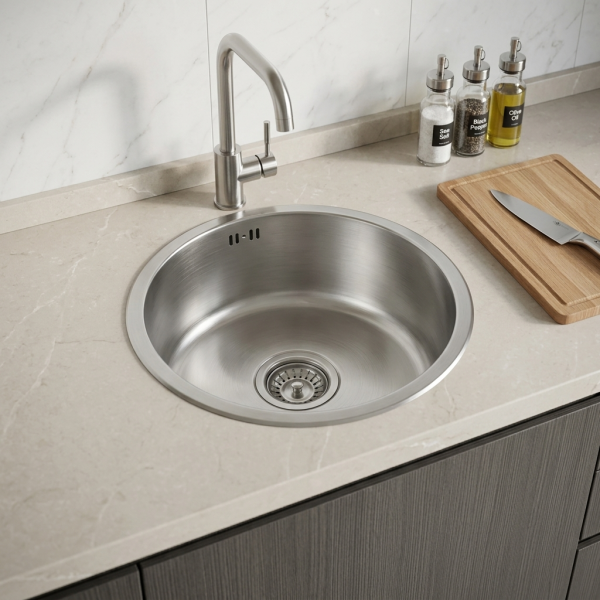
Getting It Right with Stainless-Steel Sink Suppliers: Fixing Fit, Finish and Delivery Headaches
The problem that keeps tradies and cooks grousing
Too many kitchens start off promising and finish with a gap around the sink, a scuffed finish or a month of waiting for replacements. That’s the point: choosing the wrong supplier turns a straightforward fit-out into repeated site visits and unhappy clients. If you’re specifying sinks, don’t treat them like a checkbox — treat them like a critical item. For pragmatic sourcing, I recommend checking proven options from reputable kitchen sink manufacturers early, so specifications and lead times don’t clash with the rest of the program.

Pinpoint the core faults before you buy
Common issues come down to three things: material grade, fabrication precision, and delivery reliability. Start by insisting on 304 stainless for most kitchens; 316 only where chlorides or salt air are a factor. Ask for gauge options — 16 ga is robust for commercial use, 18 ga suits busy domestic kitchens, and 20 ga is fine for light-duty. Check the manufacturing tolerances: bowl dimensions, overflow placement and flange flatness affect installation. Sound-dampening pads and undercoats matter for perceived quality. Finally, lock in lead times and penalties if late delivery messes with your install sequence.
Experience, evidence and a recognised industry pulse
I’ve specified and installed sinks across multiple projects and learned to treat supplier talks like safety briefings: clear, documented, non-negotiable. Market validation comes from trade benchmarks — at the Kitchen & Bath Industry Show (KBIS) major trends and reliable suppliers get spotlighted — and that’s where many top-tier sink manufacturers demonstrate consistent build quality and testing. Use certification sheets, sample checks and punch-list photos to cross-check what the brochure promises versus what arrives.
Simple checks that save hours on site
Ask for a physical sample or detailed CAD files. Verify the radius of corners (tighter radii look modern but complicate cleaning), confirm whether rims are rim-mount, undermount or flush, and check waste hole sizing against standard drains. Request finish samples under your site lighting; brushed satin can hide fingerprints but aggressive polishing will show scratches fast. Confirm whether accessories (colanders, grids, strainers) are included or sold separately — those extra items often cause back-and-forth orders.
Alternatives and trade-offs worth knowing
If noise or thermal performance is a priority, thicker stainless or added undercoating help. Composite granite looks luxurious and resists scratching, but it’s heavier and can chip; fireclay has an enduring look but is brittle and expensive. Choosing a cheaper sheet-metal supplier might save cash upfront but cost you hours on rework. Decide whether appearance, longevity or budget leads the brief, then match the supplier’s demonstrated strengths to that priority.

Mistakes that repeatedly trip people up
Don’t assume standard sizes fit custom cutouts. Don’t accept vague finish descriptions like “brushed” without a sample. Don’t ignore packaging and transit protection — dents in stainless are avoidable but often caused by poor crating. Don’t rely solely on online photos; check dimensional drawings and warranties. And don’t forget statutory compliance where required — a supplier should supply test reports if a project needs them.
Final take — what actually fixes the problem
Solve the headaches by specifying clearly, demanding samples, and working with suppliers who document tolerances, delivery terms and after-sales support. That’s where projects stop stalling and kitchens start getting finished right. For many fit-outs I’ve seen, the sensible middle ground — consistent quality, timely delivery and clear specs — is what separates headaches from smooth installs, and that’s the kind of steady support you find with AOGLAN.