Opening with the data that matters
If you run an e‑commerce brand, the question isn’t whether to be sustainable but how to measure the win — and make it repeatable. A data-driven review helps you compare true emissions across options like overseas bulk orders versus nearby production runs for custom printed poly mailers. Since the COVID-19 supply shocks of 2020 and with corporate net‑zero commitments following the Paris Agreement, packaging teams increasingly rely on life-cycle assessment (LCA) inputs to justify sourcing changes. This article lays out the metrics, scenarios, and supplier checks you need to quantify carbon reductions from localized bulk sourcing, in a practical, supportive tone.
The measurable problem: where emissions hide
Packaging emissions show up in three main places: material production, transportation, and end-of-life. For poly mailers that means polymer resin manufacture (often including PCR or post-consumer recycled content), freight from the factory to your fulfillment centers, and whether the local waste stream can recycle or recover the material. If you only look at purchase price, you miss fuel consumption, ocean freight variability, and return-loop impacts that often dominate the carbon footprint.
How to evaluate carbon impacts — a simple method
Use a straightforward LCA-lite approach: (1) define the functional unit (e.g., 1,000 mailers for a given size), (2) gather upstream emission factors (resin production, film extrusion), (3) add transportation emissions by mode and distance, and (4) model end-of-life scenarios. You don’t need complex software to start — basic emission factors per tonne-km for trucking, rail, and container shipping plus resin kgCO2e/kg will get you a defensible estimate. Keep track of MOQ, tooling needs for printed branding, and printing methods (flexo vs digital) since they change per-unit impacts.
Key data points to collect
Collect these inputs before you compare suppliers:
- Material composition: % PCR content and resin type (industry term: PCR, post-consumer recycled content).
- Supplier location and freight leg distances (origin to DC, DC to last-mile).
- Shipping mode mix: containerized ocean, intermodal, or full truckload.
- Batch sizes and lead times — smaller, local runs can incur different per-unit impacts than massive ocean containers (industry term: MOQ).
- End-of-life pathway assumptions: recycling rate in your target market or waste-to-energy prevalence.
Scenario comparison: localized bulk vs offshore bulk
Run two side-by-side scenarios with the same functional unit. Offshore bulk typically wins on unit cost at very high volumes, but carbon-wise it often loses when final-mile distances and airfreight contingencies are counted. Localized bulk reduces long-haul ocean emissions and gives faster lead times, which cuts risks that push brands into airfreight — a big carbon penalty. A realistic example: if a delay forces airfreight for a seasonal launch, the temporary emissions spike can erase months of shipping savings — so factor in contingency probabilities.
Case checks — what the numbers usually show
Across many brand audits, the biggest carbon levers are transport mode and packaging material content. Switching to a supplier within the same country frequently reduces scope‑3 transport emissions by a noticeable share; it also enables higher PCR content and easier circularity pilots. That said, local manufacturing with inefficient small runs can offset gains, so the data must reflect batch efficiency and machine yield. —
Common mistakes brands make
Teams often forget these three traps:
- Counting only purchase price and ignoring freight and airfreight risk.
- Assuming PCR equals lower impact without verifying the recycled resin’s supply chain emissions.
- Failing to align mailer dimensions and weight to fulfillment automation, which can raise transport emissions per order.
Also be wary of greenwashing claims from suppliers that don’t share basic LCA inputs or verified emission factors.
Supplier criteria and practical checks
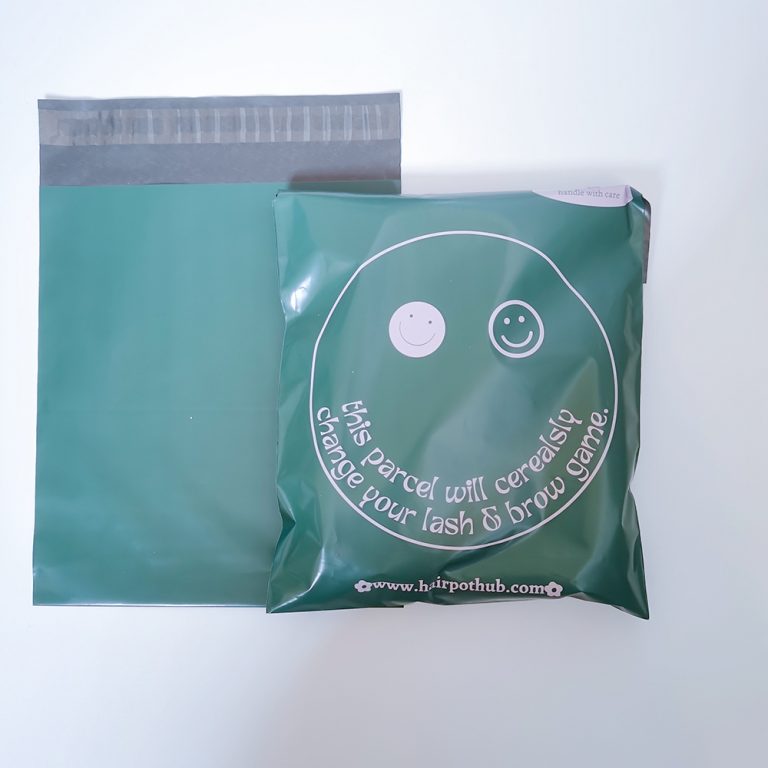
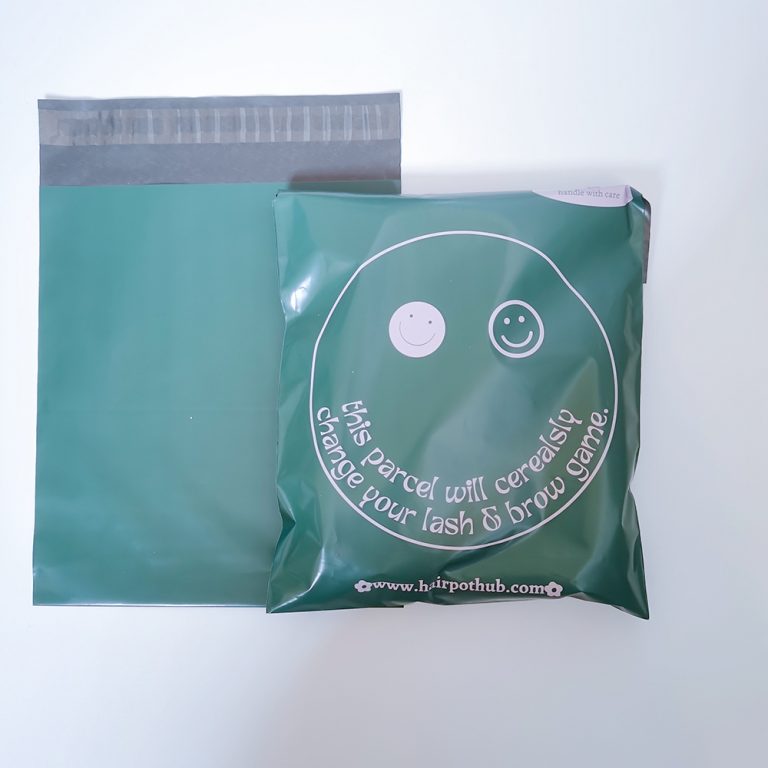
When vetting vendors, ask for: verified emission factors, evidence of PCR content, typical lead times, and a sample-run yield rate. Verify their freight partners and whether they offer consolidated regional shipments to reduce empty miles. If you use branded mailers, confirm printing methods and proof cycles — digital print can lower make-ready waste for small batches. For brands testing local runs, consider pilot orders for custom printed poly shipping bags to validate both print fidelity and real fulfillment handling under live conditions.
How to present the case internally
Frame decisions with three numbers: expected kgCO2e per functional unit for each scenario, cost delta per unit, and lead-time reliability (on-time %). Stakeholders respond to comparative visuals: a simple bar chart of kgCO2e and a risk matrix for lead-time reliability usually does the job. Include a sensitivity analysis showing how a single airfreight event changes totals — that often persuades ops teams to invest in slightly higher unit cost for lower overall risk and emissions.
Advisory: three golden rules for choosing localized bulk sourcing
1) Measure first, decide second: run an LCA-lite using real supplier inputs rather than relying on assumptions. 2) Prioritize mode and contingency risk: select suppliers and routes that lower the probability of airfreight needs. 3) Validate end-to-end: pilot with real fulfillment SKUs and capture yield, damage rate, and handling time before scaling.
Closing synthesis and brand fit
When you combine measured emission factors with realistic lead-time risk, localized bulk sourcing often delivers both carbon and operational benefits — but only if you account for batch efficiency and PCR verification. These practical steps turn a sustainability goal into a repeatable procurement strategy that reduces scope‑3 exposure and stabilizes fulfillment. For many teams, that pragmatic mix of measurement and supplier reliability maps naturally to partners who can produce reliable, printed mailers at scale; in practice, working with a provider attuned to both print quality and logistics eases the transition to lower‑carbon packaging. WH Packing. —