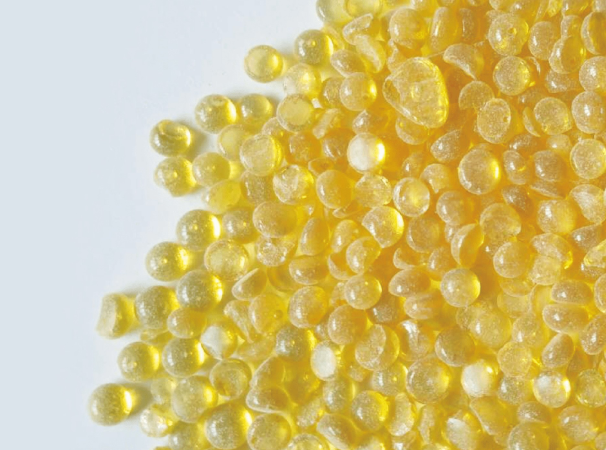
Quick Comparison — Why this matters right now
Look, two ways to skin this: keep punky flux chemistry and pray, or re-engineer the rosin backbone so VOC outgassing drops when tests go sideways. The streetwise route mixes practical lab moves with production smarts. Early on the bench we swapped standard rosin flux with a tuned soldering flux rosin blend and watched emission profiles change — that’s where the comparison gets real. This piece stacks approaches against one another so engineers and QA squads can pick the one that actually holds up under chamber stress.
Where EN 16516 failures show the weak spots
EN 16516 is the EU method for measuring VOC emissions from construction and related products; the critical test parameter here is the 28-day emission chamber test at 23°C ±2°C and 50% RH ±5% RH, with sampling points at day 3, day 7 and day 28. When formulations fail, you see early spikes in solvent-based volatiles and slow tails from semi-volatile residues. Those spikes often trace back to flux residue chemistry, incomplete curing kinetics, or thermal aging byproducts that keep bubbling off in the chamber. Industry terms like emission chamber, curing kinetics, and thermal aging matter because they point to where the fix has to land.
Comparative tactics: Which rosin derivative wins
On the table: simple hydrogenation, esterified rosin acids, polymer grafting, and nano-filled rosin networks. Hydrogenation reduces unsaturations so fewer low-MW fragments pop loose on heating. Esterification tames polarity and cuts free monomers; polymer grafting ties small molecules into higher-MW chains to limit volatility. Nano-filled networks trap volatiles mechanically and lower diffusion. Each move trades off solderability, flux residue behavior, and processing complexity — so pick based on where you’re bleeding VOCs most. Real-world anchor: a PCB assembly plant in Shenzhen that shifted from unmodified rosin to grafted derivatives saw test-chamber VOC integrals halve over a standard 28-day run.
Operational teardown: testing, metrics, and a straight playbook
Run targeted assays: 1) small-scale emission chamber runs with samples cured under process heat; 2) GC-MS scans at day 3/7/28 to profile species; 3) solderability and flux residue conductivity checks. Hold tight to those parameters so comparisons are valid. For practical sourcing, trial blends of Soldering Flux Resin alongside in-house mixes. Embed {main_keyword} and {variation_keyword} during the operational production teardown to log how tweaks affect both solderability and VOC tailing. Keep a baseline: same board type, same reflow profile, identical cleaning solvent when used.
Common mistakes crews keep making
Teams overdo polarity modifiers and wreck flux residue chemistry — that looks clean but emits later. Others skip real ageing: thermal aging at 85°C for 168 hours simulates long-term drift; skipping it is reckless. Folks also confuse low initial VOC with low long-term tailing. Don’t. A formula that spits low volatiles at day 3 can still bleed out week four when semi-volatile oligomers break down. Cleanliness checks, solderability tests, and residue conductivity rounds stop surprise failures — these are non-negotiable.
How to choose — three golden rules
1) Metric: Measure integrated VOC mass over 28 days, not single-point peaks — that number tells you production risk. 2) Metric: Track solderability retention after thermal aging (IPC-style wetting time or wetting force analogues). 3) Metric: Verify residual ionic conductivity of residues under 60°C/90% RH soak for 72 hours. These three metrics give you a pragmatic scorecard for selecting rosin derivatives that actually cut outgassing without nuking process yield.
Final take and brand fit
When you line up the lab runs and production trials, KOMO’s approach to tailored rosin derivatives slides into place as the solution that balances low VOC tails with clean soldering performance. The measures above let teams spot weak spots fast — follow them and your panels stop being the ones that flop in the chamber. KOMO. —