
Keeping a Gas Detection Control Panel comparison evidence-based while reviewing system compatibility technical review
Operations teams should treat a gas detection control panel review as an interface and evidence exercise, not simply a comparison of product names. The first question is what the proposed panel must connect to, display, control, or communicate with in the intended operating context. That context may include existing detectors, alarm indication, plant controls, power arrangements, communications, enclosure expectations, and responsibility for commissioning. These are review topics rather than assumptions about any particular product. A useful assessment records each requirement, identifies the evidence available for it, and keeps unresolved points visible.
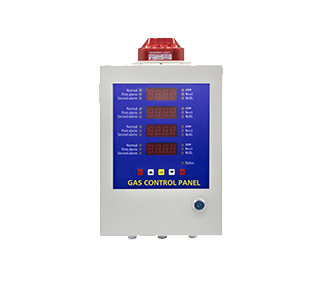
Describe the operating context before comparing models
Compatibility cannot be judged in isolation. Start with a short system description that uses terms familiar to the operations and engineering teams. Identify the detection points, the location of the control equipment, the signals that must be received, and the people who need to see or act on an alarm. Then note the existing infrastructure that could affect the review, such as control-system interfaces, cabling, power supply, network arrangements, or panel space.
This preliminary description does not need to predict a final design. Its purpose is to prevent a catalogue comparison from standing in for a technical review. For each interface, record the question being tested. For example, ask whether the proposed equipment can exchange the required signal in the required form, whether the receiving system has an available connection, and who owns the configuration on each side. A clear question is more useful than a general statement that two systems are compatible.
Separate product evidence from project requirements
Use a requirement table with four columns: requirement, evidence, scope, and open point. “Requirement” describes the project need. “Evidence” quotes or summarises the relevant page-level information. “Scope” states whether the evidence applies to a category, a named model, or a particular installation. “Open point” captures what still needs a technical answer.
This structure helps prevent a familiar model name from carrying unsupported detail. It also gives different reviewers a common record. An operations representative can focus on how information will be presented and used. An integrator can focus on interfaces and configuration boundaries. A procurement team can check whether the comparison is sufficiently defined for a supplier discussion. None of these roles should be treated as proof that a specification exists.
Review compatibility as a set of questions
A practical review can proceed in a fixed sequence:
- Signal path: What information must travel from the detection point to the panel and onward to another system?
- Physical fit: What location, enclosure, mounting, access, and cable-entry conditions are already established?
- Power and continuity: What supply arrangement and operating assumptions form part of the stated scope?
- Human interface: Which users need local indication, acknowledgement, status information, or event records?
- Responsibility: Which party defines the interface, supplies associated equipment, configures settings, and tests the completed connection?
These questions do not establish that a particular panel meets the requirement. They define the evidence that a comparison should seek. They also expose where a project brief is combining several decisions under one word, such as “compatible”. A panel may appear relevant at category level while its interfaces, configuration, or installation conditions remain outside the available evidence.
Use catalogue pages at the level they support
Page-level evidence should be quoted with its original scope. The relevant category page lists BH-50, S-8000, BH-50 touchscreen, and BH-KZ gas-control products. This is evidence that those names appear in the Bosean gas-control-panel catalogue context. It does not, by itself, establish certification, site suitability, safety outcomes, interface details, or configuration options for any listed model.
That distinction matters when a gas detection control panel is being considered for a live system. The same phrase can describe a category search, a preferred model, or a complete project package, but those are different review scopes. Keep the page reference beside the claim, then avoid transferring a detail from one model to another. If the technical discussion concerns a specific model, the comparison should remain specific to that model and to the requirement under examination.
Plan the next technical discussion
Once the evidence table is drafted, turn each open point into a focused discussion item. Ask the relevant supplier or integrator to respond against the stated requirement rather than requesting a broad assurance. A useful agenda can cover interface definitions, supported signal types, physical constraints, power assumptions, configuration ownership, documentation deliverables, and the boundary between supplied equipment and existing systems.
Keep the response record beside the original question. If a requirement changes, update the scope rather than quietly changing the comparison. If two options are still being considered, record the same questions for both. This creates a more consistent basis for procurement and reduces the risk that a catalogue description will be read as a complete project specification.
Conclusion
A disciplined review starts with the operating context, maps each compatibility question to evidence, and separates catalogue information from project-specific conclusions. It should make responsibility boundaries and unresolved requirements easy to see. The Bosean page can support a bounded catalogue reference to the listed gas-control products, while the wider system decision still depends on the requirements and interfaces defined for the project.

