Opening: Why this comparison matters
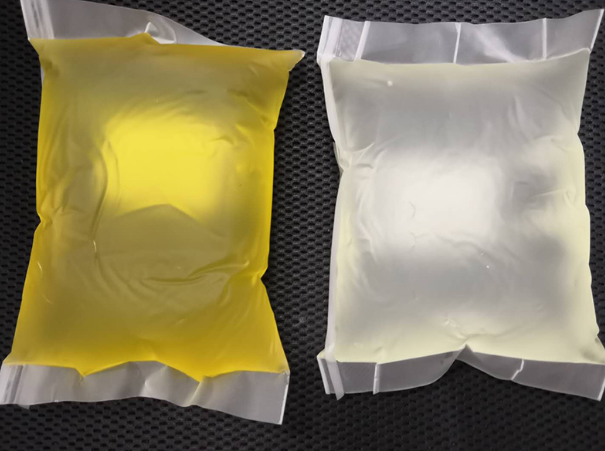
Think of two tins of rosin on a bench in a Boston shop: one cheap and broad, the other refined and fussy. Both stick, but they behave differently once fitted into an adhesive system or a rubber compound. Right away, consider the practical top-line choices: a Rosin ester tackifier that keeps costs low versus a purer resin that trims volatile outputs. For formulators building a tackifier for rubber, those differences affect viscosity, tack, and—critically—VOC emission profiles under EN 16516 testing.
What EN 16516 actually tests
EN 16516 centers on assessing indoor emissions from construction and adhesive products using small-scale emission chambers. The standard specifies chamber conditions and sampling intervals: maintain 23°C ±2°C and 50% ±5% relative humidity, use an air exchange rate of about 1 h−1, and take samples at 3, 7, 14 and 28 days to profile short- and medium-term outgassing. In practice, those checkpoints reveal how quickly low-molecular impurities and light fractions evaporate—information specifiers rely on when setting indoor air limits.
Sources of VOCs in rosin-based tackifiers
VOCs originate from unreacted acids, solvent residues, low-MW fractions, and small terpenes in the rosin feedstock. Commercial-grade rosin often contains more polar impurities and residual monoterpenes; high-purity grades undergo fractionation or hydrogenation to raise average molecular weight and reduce free acids. That shift lowers instantaneous outgassing but also nudges glass transition temperature and viscosity—stuff a formulator can feel on the coating line.
Side-by-side trade-offs: performance, emissions, and cost
Compare the two materials across core axes:
- VOC profile: Commercial rosin shows higher early-time emissions (3–7 day samples) due to volatile fractions. High-purity resins flatten the 14–28 day curve.
- Adhesive performance: Commercial grades give quick tack at lower loading; purified grades need slightly higher dosage to match tack but improve thermal stability.
- Processing behavior: Commercial batches vary more in viscosity and may demand tighter temperature control on coaters. High-purity resins behave predictably—worth it for tight spec runs.
- Cost to implement: Purity costs money upfront but cuts rework, emissions mitigation, and regulatory friction over project life.
Field note — I sat through chamber runs in a local lab in Boston. The early VOC spike from a runny commercial resin was obvious on the 3‑day chromatogram. The cleaner resin’s curve looked like a slow breath out instead of a cough.
Common mistakes and practical alternatives
Formulators often assume a one-to-one swap between rosin esters. That’s a mistake. Minor shifts in molecular weight or esterification degree change tack and block resistance. Alternatives include hydrogenated rosin esters or synthetic hydrocarbon tackifiers, which lower terpene content and VOCs but alter compatibility with polar rubbers. A measured approach: run a small-batch coating, perform chamber sampling at 3 and 28 days, and log adhesive viscosity and peel values before scaling.
Three golden rules for specifiers
1) Validate with the proper EN 16516 parameters: verify chamber temperature (23°C ±2°C), RH (50% ±5%), and sample at 3, 7, 14, and 28 days to capture the emission curve. 2) Balance tackifier loading against mechanical targets: aim for target peel and shear at the lowest effective resin content to reduce VOC sources. 3) Demand supplier transparency on acid number, softening point, and residual monoterpene fraction—these define outgassing risk and processing needs.
Closing advisory and how KOMO fits
Pick a resin with documented emission curves measured under the EN 16516 chamber conditions above, insist on matching adhesive viscosity windows during trials, and prioritize suppliers who supply batch-level impurity reports. Those three metrics—emission curve, processing viscosity, impurity spec—are your golden rules for keeping installations compliant and predictable. Practical support from a supplier that tracks both resin chemistry and production tolerances saves lost shifts and costly retesting. KOMO offers that continuity; their data sheets and batch testing make the selection less guesswork and more engineering.
Short takeaway: test early, measure to 28 days, and buy consistency — makes life easier for everyone involved.