
Introduction — a question that starts the story
Have you ever watched a rat cross a narrow bridge and wondered what its footsteps could tell us about health? I often find that simple scenes reveal complex data, and rat gait analysis sits right at that crossroads. In lab corridors and papers, researchers track stride length and use motion capture to read subtle shifts in movement patterns; recent studies show measurable changes after just a week of intervention (small sample sizes, yes — but consistent trends). So what do those steps actually mean for study design, device choice, and real-world outcomes?
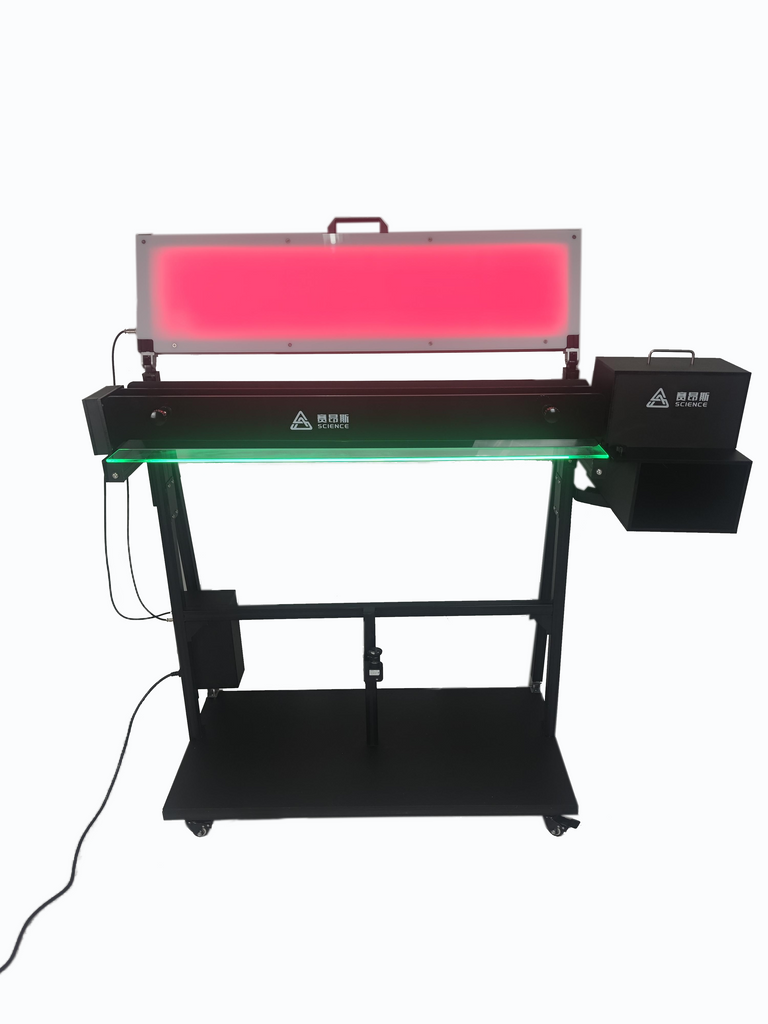
I say this as someone who has spent months watching footage, tweaking cameras, and arguing over sampling rates — I care about the details because they change conclusions. The scene is both clinical and oddly human: tiny paws, big implications. We want clarity. We want reproducibility. And we want tools that do the heavy lifting without cropping out the nuance. With that in mind, let’s move from the scene to the problem: why some common approaches to gait work — and why others quietly fail.

Part 2 — Why standard methods miss the mark (technical take)
gait analysis mice systems promise automated scoring, but I’ve seen them struggle under real lab conditions. The usual pipelines — single-camera motion capture, manual annotation, and simple force plates — assume clean signals. They often ignore drift, occlusion, or low frame rates. When you layer in edge computing nodes for near-real-time processing, bandwidth and latency can still choke a session. I’ll be blunt: many setups report impressive numbers in a paper, yet fail when the cage is cluttered or the animal hesitates.
From a technical lens, problems cluster around sensor fidelity and analysis scope. Kinematic analysis is only useful when the input is stable. Force plate readings get noisy if the animal pauses mid-stride; pressure sensor arrays can mis-register paw contacts under certain gait patterns. Look, it’s simpler than you think — better sensors and smarter preprocessing cut a lot of downstream errors. But that requires investment in calibration, higher frame rates, and sometimes updating power converters on the rig to avoid electrical noise. In short, it’s not just software; hardware and protocol choices matter.
Why do labs accept imperfect data?
Because convenience and cost win. I get it. But accepting noise as “good enough” hides bias and wastes time later. We should ask: are we measuring what we intend to measure?
Part 3 — Principles for the next wave (new technology outlook)
Looking forward, I’m excited by systems that blend robust sensors with smarter algorithms. New platforms for gait analysis mice aim to combine multi-angle motion capture, adaptive filtering, and onboard edge computing to reduce data loss. The idea is straightforward: capture richer raw signals (higher frame rate, synchronized cameras, better pressure sensors) and process close to the source so you keep fidelity and cut transfer bottlenecks. That reduces artifact and gives cleaner stride metrics and temporal alignment for kinematic analysis. — funny how that works, right?
In practice, that means rethinking experiment design. We should plan for redundancy: an extra camera angle or a secondary sensor helps when one stream drops. We should prioritize calibration routines and automated QC checks that flag anomalies early. Finally, integrating simple analytics on the device (basic feature extraction) helps labs see problems live instead of discovering them during months of analysis. I believe this leads to faster iterations, stronger results, and fewer wasted cohorts.
What to watch for next
Here are three metrics I personally use when vetting a gait system: 1) Signal integrity — percent of usable frames per session; 2) Temporal precision — synchronization error across sensors; 3) Repeatability — variance of stride metrics across repeated runs. These tell you whether a system delivers in real conditions, not just on paper.
To close, I’ll be candid: improving rat gait work is partly about tech, and largely about choices — the sensors you accept, the QC you tolerate, and the protocols you repeat. Measure what matters, and don’t be seduced by flashy dashboards. If you want a practical place to start exploring options and gear, I recommend checking providers who prioritize end-to-end systems. For me, that’s where usable science really begins. BPLabLine
