
Introduction
Have you ever wondered why a shop with decent ventilation still smells like solder and solvent at closing time? I see that scenario a lot — and it’s not just one shop. In many facilities, fume collector manufacturers work against tight budgets and rising regs, while airborne particulate counts still spike during key processes (studies show workplace particulate exposure can exceed safe limits by 2–5x in some operations). So what do we actually expect from the next wave of upgrades: marginal tweaks, or real, measurable change?
I’m writing as someone who’s visited metal shops, labs, and small production lines. I’ve watched managers swap a cartridge here and add a fan there, hoping for big results. The pattern is familiar: quick fixes that mask deeper problems. Why do those fixes fail, and what should we really be testing? Let’s move on and unpack the core issues — I’ll point out what I’ve learned on the floor (and what I’d do differently tomorrow).
Part 2 — The Hidden Flaws of Industrial Systems
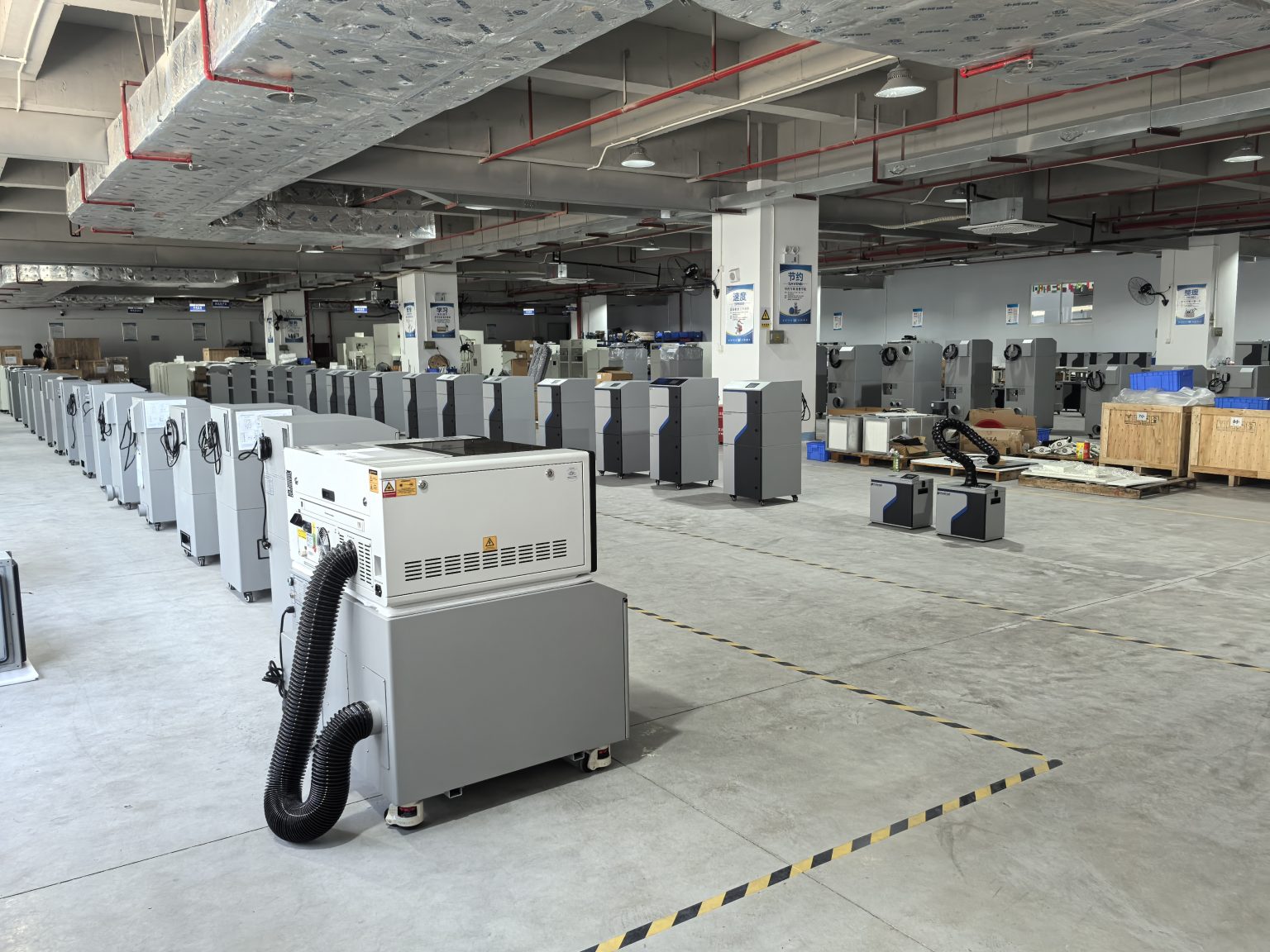
industrial size air purifiers sound like the obvious answer. Bigger unit, bigger airflow, right? Not always. In my experience, scale alone ignores key system-level failures. For example: poor capture at the source, mismatched airflow against process heat, and filter media chosen for cost over capture efficiency. When HEPA filters are placed without proper sealing, or when activated carbon beds aren’t sized to the solvent load, you get partial removal and a false sense of security. Fan blowers installed for brute force can create turbulence that re-suspends particles rather than capturing them. Look, it’s simpler than you think — you must match capture, conveyance, and filtration as a single chain, not as isolated choices.
Where do common systems fail?
First, many systems assume uniform air movement. Reality: air moves in pockets. I’ve measured dead zones near fixtures and corners where contaminants linger. Second, maintenance regimes are often reactive. Filters are swapped on a calendar, not on differential pressure or capture performance. Third, controls are basic. Demand-controlled ventilation exists, but too few plants tune setpoints to real emissions. These are not exotic problems. They’re practical pain points: missed capture, clogged media, noisy fans, and rising energy bills. I’ve seen teams burn hours chasing these issues because the original spec focused on flow rate instead of capture efficiency, and that choice haunts the system for years.
Part 3 — New Principles and How to Measure Success
What changes should a fume collector manufacturer consider next? I’d start with system thinking. That means pairing better sensors with smarter control logic, and designing for source capture first. Modern designs use local sensors to spot spikes in real time and then route airflow where it’s needed. That reduces overall energy use and improves capture — and yes, it requires better components: reliable power converters for variable drives, and sometimes edge computing nodes to run on-site analytics. When done right, an industrial size air purifiers approach becomes dynamic, not static. I’ve watched a plant cut particulate load by half simply by adding a few low-cost sensors and tuning fan speeds (— funny how that works, right?).
What’s Next
I want to be practical here. You should test new principles in small pilots. Try source-mounted capture arms with matched low-speed fans. Add a differential pressure switch and a particle counter to verify real reductions, not just a pressure drop. Compare lifecycle costs: energy, filter replacement, and downtime. Don’t fall for promise-heavy specs without real-world checks. I’ve learned to value proof over pitch — because a spec sheet rarely tells the full story.
To wrap up, here are three simple evaluation metrics I use when choosing or recommending systems: 1) Capture Efficiency at the source (measured with particle counters), 2) True System Energy Use (not just fan power), and 3) Maintenance Burden (time and cost per year). Those three metrics tell you what matters. If you keep them front and center, you’ll make better buys and design smarter systems. I stand by that from hands-on work and long conversations with teams who are tired of fixes that don’t last. For those building and buying solutions, consider brands that back performance with field data — like PURE-AIR.
