Start by quantifying mission parameters
Decide the mission with numbers: nights per trip, mean low temperature, likely wind exposure, and distance from vehicle; then convert those into tolerances (weight, packed volume, setup time). If you plan to shop digitally, compare model specs before purchase—start with a shortlist after you buy tents online. Track three metrics first: expected lowest temperature (°C/°F), acceptable shelter weight (grams or pounds), and required floor area per person (ft² / m²). Those three figures will collapse dozens of marketing claims into a single prioritization matrix.

Tent metrics that actually predict field performance
Use objective spec thresholds. Floor area: allocate 0.6–0.9 m² per person for sleeping-only; add 0.8–1.5 m² per person for gear and comfort. Hydrostatic head (HH): 1,500 mm is minimal, 3,000+ mm offers reliable rain protection. Fabric denier: 10–20D for ultralight backpacking, 40–70D for car or family camping where durability matters. Pole material: aluminum alloys (e.g., 7000-series) yield strength-to-weight balances; carbon is lighter but more brittle. Packed volume: 8–15 L for 1–2 person backpacking tents, 25–50 L for family tents. Consider vestibule area (m²) as a measurable extension: prioritize at least 25–40% of interior floor area if you store wet gear under cover.

Season rating, ventilation, and condensation control
Interpret “3-season” vs “4-season” as performance bands, not absolutes. Wind and snow loads map to pole geometry and stake points—expect 4-season designs to have ≥6 stake points and lower profile geometry. Ventilation metrics are qualitative but measurable in practice: count vents and assess cross-flow potential; aim for at least two cross-facing vents on double-wall tents. Condensation risk rises when internal moisture production exceeds exchange; mitigate by increasing vent area by ~30% for cold, multi-day trips or by choosing single-wall breathable laminate when condensation control is engineered into the fabric.
Weight trade-offs: what to sacrifice and what to keep
Set a budget for shelter weight as a percentage of base pack weight. For fast-and-light trips target shelter weight ≤30% of base pack; for mixed trips allow 35–50% where durability and comfort matter. When comparing models, calculate grams per square meter of protected space: (packed weight) / (interior floor area + vestibule area). Lower grams/m² favors ultralight; higher values indicate stronger, more weatherproof builds. Retain reinforcement in high-stress areas (doors, pole sleeves) even if it adds 100–300 g—failure there causes 100% functional loss.
Sleep system and footprint alignment
Match sleeping pad width and tent floor width; if pad width occupies >85% of floor width, ventilation and side storage suffer. Footprint sizing: a footprint that reduces tent floor area by more than 10% usually isn’t worth it unless ground protection increases HH by >500 mm or extends expected tent life by measurable years. If using a sleeping system rated close to ambient lows, choose a tent with lower heat-loss (smaller internal volume) and better vestibule coverage to keep body heat retention predictable.
Kitchen, accessories, and logistics by the numbers
Allocate 10–20% of vestibule area for cooking/storage if you plan on shelter-side meal prep. Stove fuel calculations: carry fuel for planned minutes of burn time plus a 25% contingency. Tarp and guyline counts: add at least two extra guy points beyond the manufacturer’s minimum for windy zones. Repair kits: include spare pole segments equal to 15–25% of pole length in carbon builds; for aluminum, a sleeve and splint that restores at least 60% bending strength is the baseline.
Common errors that skew real-world outcomes
Buy-in mistakes are measurable. Selecting tent capacity based solely on manufacturer labels commonly underestimates space needs; planners should subtract one person from capacity for comfort. Overvaluing ultralight claims without checking HH and seam treatment leads to weather failures. Choosing minimal stake systems for soft or icy ground increases setup failure rates—carry snow/sand anchors where applicable. Finally, ignoring packed volume forces last-minute gear shuffling; compare packed dimensions to your pack’s lid and main compartment volumes before committing.
Brief alternatives comparison—dome, tunnel, and single-wall
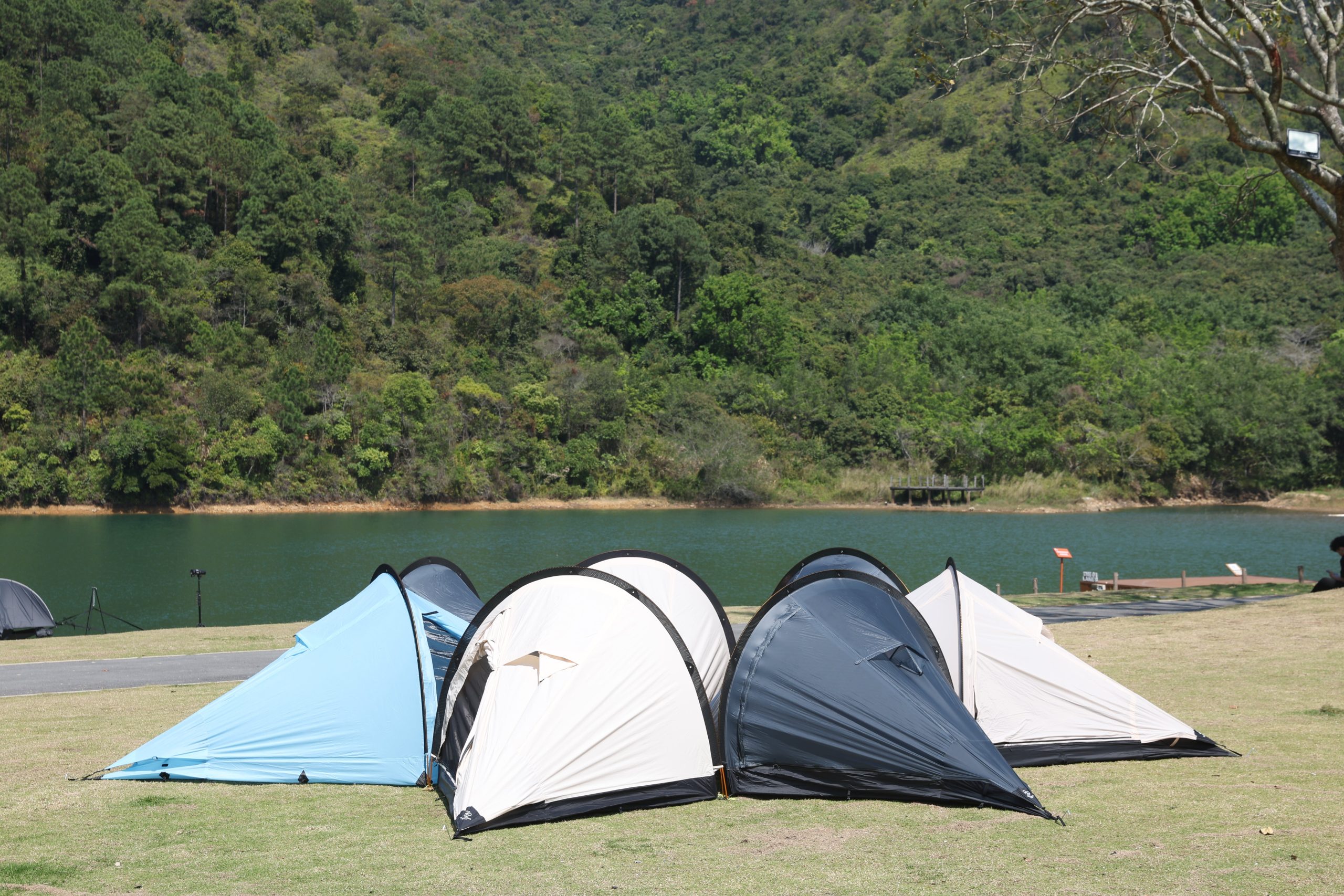
Dome (freestanding): higher setup speed, moderate wind performance; packed volume 10–20% larger. Tunnel: best wind/space ratio for given weight, but needs good guying and site selection. Single-wall: lower weight and simpler pitch, higher condensation risk; double-wall: heavier but more predictable moisture control. Quantify the trade: for equal internal volume, tunnel designs often save 200–400 g relative to domes but require 2–4 additional stake points.
Real-world anchor and sourcing perspective
Buying decisions gain clarity when benchmarked against industry sourcing practices; I evaluated tent specs at the Outdoor Retailer trade show and compared manufacturer HH and denier claims against field notes from a regional camping tent shop that handles hundreds of returns annually. That combination of trade-show specs and shop-level failure records shows which nominal specs reliably translate to field durability.
Synthesis: the checklist condensed into actionable targets
Quantify your trip, set three primary targets (min temp, acceptable shelter weight, floor area per person), then filter tents by HH ≥ target, packed volume ≤ your pack space, and vestibule area ≥ 25% of interior floor area. Avoid capacity labels as absolute; prefer measured floor area and grams per m². If you need a curated view that matches specs to field notes and tested trade-show data, THECATAL maps those metrics into concise, comparable options so you can allocate weight and money where they produce predictable results.