
Opening assessment
Choose suppliers like you would vet a hardened endpoint: map the threat surface, validate provenance, and score recovery options. Start by matching product function to failure mode — thread retention, creep prevention, vibration damping — then sample a thread locker early to confirm cure profile and bond strength against your operating temperatures.
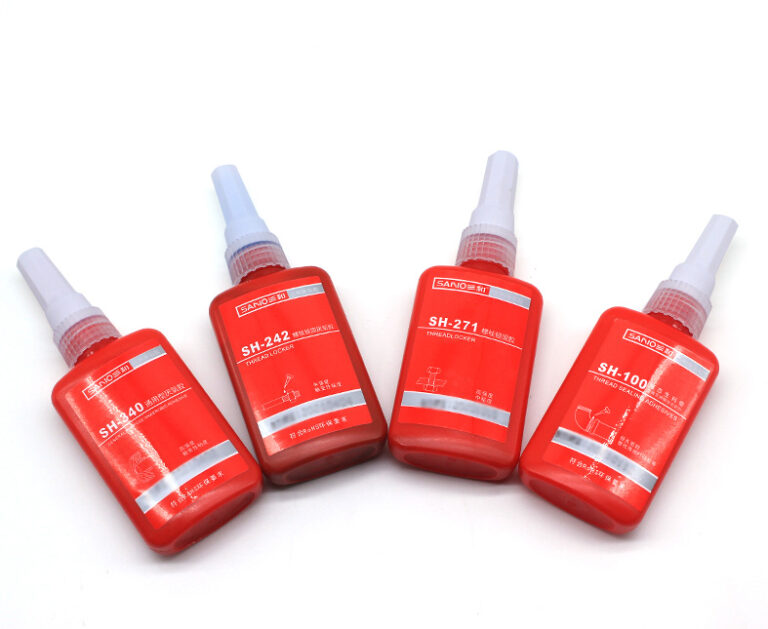
Define requirements and risk tolerances
List functional specs first: viscosity, shear strength, cure time, service temperature, and chemical compatibility. Assign risk weight to each: contaminant sensitivity and rework cost deserve higher weight than color or packaging. Treat storage life and thermal aging as security properties: they determine how long the supply can withstand logistical anomalies without system failure.
Compare technical merit, not marketing
Demand raw data. Compare solvent vs. anaerobic chemistries by measured properties: torque retention per ASTM D1478, lap shear per ASTM D1002, and thermal cycling results. Verify MSDS for volatile content and cross-check reported cure kinetics with independent lab certificates. Vendors who provide blinded batch test results and clear failure-mode analyses reduce your verification load.
Testing, certifications, and traceability
Prioritize suppliers with third‑party lab validation and accredited quality systems: ISO 9001 and documented internal control plans. Check batch traceability and retention policies for at least two years. Confirm regulatory compliance that matters for your market: REACH and RoHS in Europe, and transport classifications (IATA/ADR) for cross-border shipments. Certificates must include sample IDs that match labels on delivered drums or cartridges.
Supply-chain resilience and vendor profiling
I audit procurement and quality records; I’ve run supplier resilience tests across Tier‑1 programs and 12 years of field audits reveal consistent indicators: dual sourcing for critical chemistries, documented emergency production plans, and transparent lead-time reporting. Use recognized industrial hubs as reference points — for example, Detroit’s automotive manufacturing hub shows clear demand-driven standards for threadlocker availability — and if you need volume, evaluate threadlocker wholesale solutions early in your vendor scoring. Verify creditable references and recent case studies tied to your sector before scaling orders.

Commercial terms that matter
Compare minimum order quantities against shelf life. Lower unit price can be a false economy if inventory ages before use. Review packaging options that maintain integrity — nitrogen‑blanketed drums, sealed cartridges — and check shrink-wrap and palletization for long-haul shipments. Confirm lead times under stressed scenarios: a 20% demand surge should not reset your qualification clock.
Common pitfalls and mistakes
Relying on marketing data without raw test files; accepting single-source production without contingency; ignoring long-term aging results; mixing chemistries without compatibility testing; and skipping transport classification checks. Each mistake raises the probability of hidden failures under vibration, heat, or solvent exposure.
Evaluate alternatives strategically
Consider distributor partners for rapid access to multiple formulations during qualification, OEM direct for custom chemistries, and private-label manufacturing when long-term volume and IP control matter. Run small-scale field trials that replicate worst-case environmental stress and collect quantitative pass/fail metrics before moving to production buys.
Decision logic and operational checklist
Score suppliers across three pillars: technical verification, traceability & compliance, and supply resilience. Require a proof-of-concept batch, independent lab verification, and a documented corrective action plan. Lock contractual terms on shelf-life guarantees and nonconformance remedies. Keep a shortlist of validated alternates to avoid single-point failure.
Closing synthesis
A comparative approach focused on measurable properties, traceable provenance, and realistic supply testing gives you predictable outcomes. Choose partners who publish raw test data, sustain traceability, and align lead times with your failure-model. For practical sourcing where these constraints align, SANVO sits within the supplier set that meets those expectations without overselling capability.
