
Introduction — scenario, data, question
Have you ever noticed the thin haze that collects near a cutting table and wondered whether it matters? Recent studies show airborne particulates from laser cutting can exceed safe limits by several times in poorly ventilated shops; this raises real concerns about long-term worker health. I will discuss how a laser fume extractor fits into this problem and why simple fans are not enough. (We see it all the time — small shops, tight budgets.) The data are clear: ultrafine particles and volatile organic compounds travel beyond the workbench. So what should a responsible shop choose next — a retrofit, a central system, or a tool-specific unit? I approach this as a practitioner and analyst: I depend on readable metrics and practical tests, not slogans. My aim here is to unpack the choices with clear terms like HEPA filter, activated carbon, and fan motor behavior, and to help you make a choice that balances cost, safety, and downtime. We will move from the scene to the mechanics — next I will look closely at where common solutions break down.
Part 2 — Deeper layer: flaws in traditional solutions (technical rhythm)
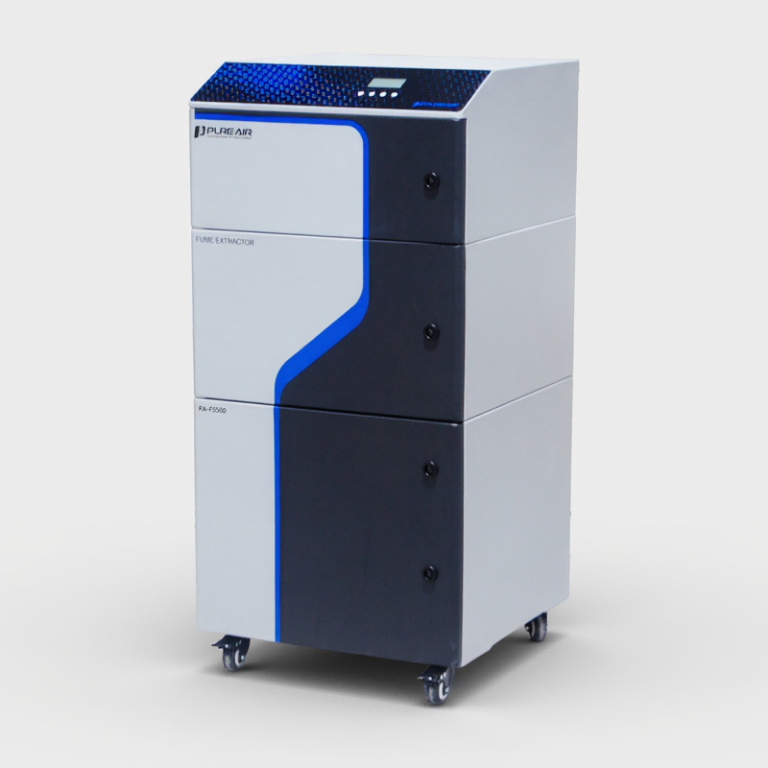
laser dust collector systems are often presented as a one-stop fix, yet many designs miss critical details. I examine two core flaws: poor capture at the source and inadequate filtration for ultrafine particles. First, capture efficiency depends on hood geometry and placement. If the extraction hood is too far or angled incorrectly, you lose 30–70% of emissions before the fan motor can draw them away. Second, filtration stages matter. A coarse pre-filter followed by a HEPA filter and an activated carbon bed will remove particulates and odors, but many units shortcut the sequence to save cost — and that’s where failures start. Look, it’s simpler than you think: proper sealing, correct airflow rates, and staged filtration are non-negotiable. I also note electrical reliability — power converters and control modules must handle variable loads from frequent on/off cycles; cheap controllers fail fast. In practice, shops tell me they swap filters too late or rely on static sniff tests rather than particulate sensors — so maintenance gaps and sensor blind spots remain hidden pain points. — funny how that works, right?
Why do standard systems fail?
Because they are built around price, not process. Engineers design for the average case, but real workshops vary. I’ve seen extraction systems sized on sheet metal throughput rather than on the chemistry of a given cut. That leads to underperformance and higher lifetime costs. To fix this, you need correct capture velocity, matched filtration media, and routine monitoring — plus occasional calibration of sensors or edge computing nodes to detect performance drift.
Part 3 — Future outlook: case examples and guidance
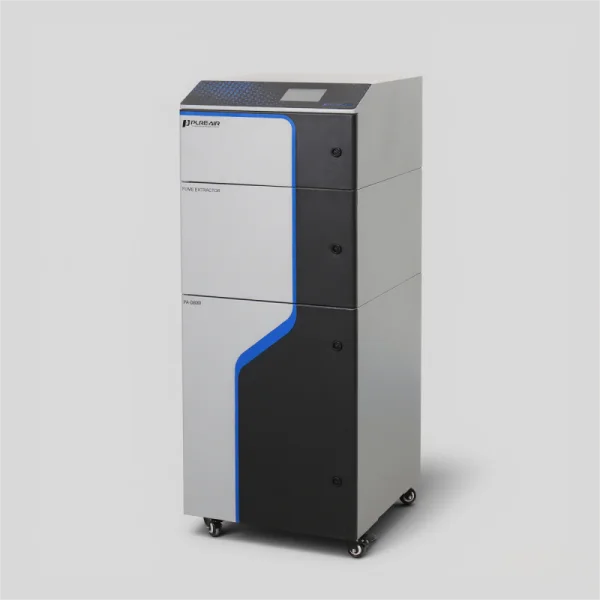
What’s next for laser fume extraction? I expect three trends to dominate: smarter sensors, modular filtration, and better user interfaces. Consider a case where a small fabrication shop swapped a generic unit for a tool-specific laser dust collector with onboard particle sensors. Within weeks they saw measurable drops in PM2.5 peaks and fewer worker complaints. That shop paired a robust extraction hood with scheduled filter alerts; maintenance became predictable. I like these practical wins because they show measurable outcomes, not just marketing promises. — and yes, some solutions use edge computing nodes to log air quality in real time, which helps tie exposure to specific processes.
What to evaluate — three practical metrics
When you compare units, focus on three metrics I rely on: capture velocity at the source (m/s), combined filtration efficiency for ultrafine particles (percent at 0.3 µm), and long-term operational reliability (MTBF, and real-world maintenance cadence). Ask for test reports, verify hood capture with simple smoke tests, and check that the control electronics support diagnostics. I should add: human factors matter. Controls must be simple; otherwise staff bypass them. — simple truth.
In closing, I’ve walked through where many systems fall short and shown how modest upgrades deliver measurable gains. I believe the right mix of capture design, staged filtration (HEPA + activated carbon), and smart monitoring produces the best balance of cost and safety. If you want a reliable partner or reference designs, I recommend looking at PURE-AIR for practical options and documented performance: PURE-AIR. I write from hands-on experience and a desire to help shops make choices that protect people and keep production moving.
