
Introduction: A Clinic Moment, Some Numbers, and a Hard Question
I was once in a small clinic late on a Friday, watching a patient lie down under a tired unit while I noted the uneven glow — it stuck with me. That red light bed had lost its intensity; sessions took longer and outcomes lagged. Recent lab checks and practitioner reports point to measurable drops in irradiance and inconsistent wavelength output as devices age (yes, even the expensive ones). So what really signals the moment to stop patching and start replacing? Let’s break it down — plainly, and with purpose — so you can act before the problem costs patient trust and clinic hours.
Hidden Flaws in Traditional Solutions: What Lurks Beneath the Surface
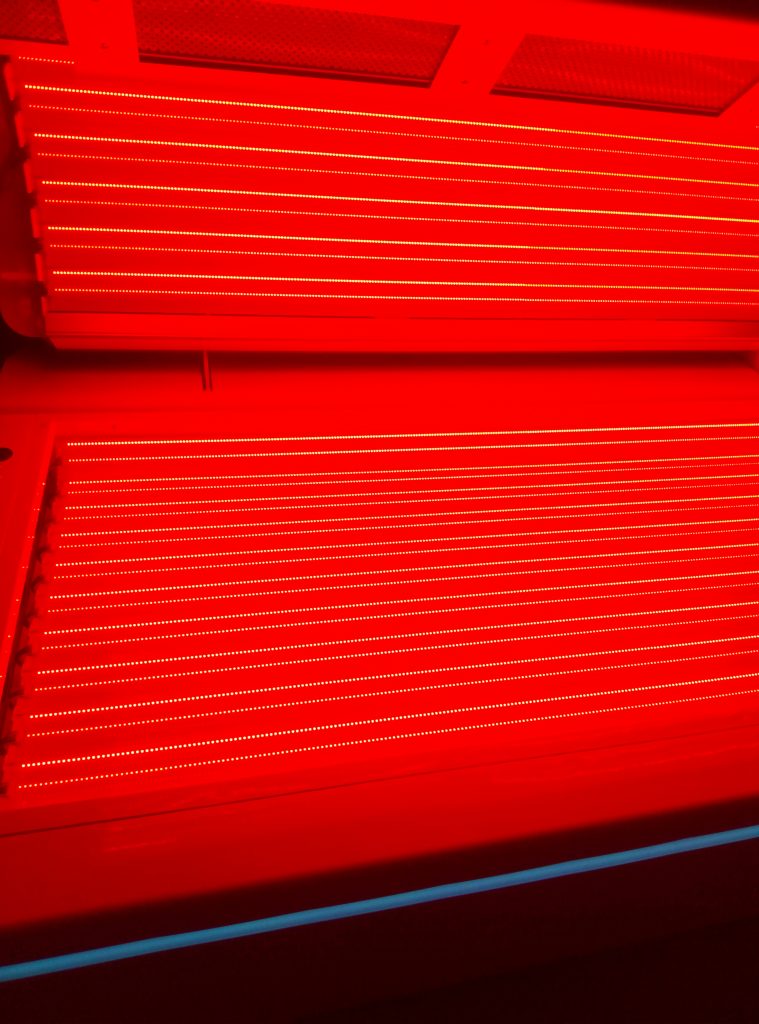
When I talk about an infrared light therapy bed, I don’t mean a cosmetic patch-up. I mean the whole system: LED arrays, power converters, thermal management. Too many clinics focus on surface features — a shiny casing, a new control panel — and they miss the deeper decay. Over time photobiomodulation performance drops due to degraded LEDs, shifting wavelength peaks, and poor heat dissipation. That affects dose delivery. In plain terms: your sessions stop delivering the same therapeutic energy. Look, it’s simpler than you think — the light intensity and the correct wavelength range are what drive cellular response, not the display logo. I’ve audited units that looked pristine but showed 20–40% lower irradiance at the skin surface; that’s not a small detail — that’s lost therapy.
Why does that happen?
Technically, LEDs age and their spectral output shifts. Power converters can heat-stress components, and thermal pathways get blocked by dust or poor design. These failures accumulate. I’ve seen control firmware that resets unintentionally and optics that discolor. The result: inconsistent treatment times and frustrated patients. If you want a reliable outcome, you need consistent irradiance, stable wavelength, and good thermal design. That trifecta is non-negotiable — and traditional fixes often skip one or two of these. — funny how that works, right?

Looking Ahead: How New Designs Change the Game
Real innovation now targets the root causes I mentioned. Modern infrared light therapy bed designs use tighter wavelength control, improved LED arrays, and smarter thermal systems so irradiance stays consistent through long clinical days. In practice, that means less guesswork for clinicians and more predictable patient responses. I favor solutions that include real-time irradiance monitoring and modular power converters; they let you replace a failing module instead of the whole bed. Those are practical differences — not marketing fluff.
What’s Next?
Looking forward, I expect integrated sensors and simple dashboards to become standard. Edge diagnostics—local sensors that flag wavelength drift or thermal hotspots—will let clinics act before outcomes change. Case examples already show clinics reducing session variability by tracking irradiance and swapping LED modules on a planned schedule. Patients notice consistency, and practitioners regain control. I’m optimistic here. But caution: not every new feature is useful. Vet technical claims, ask for irradiance maps, and demand clear specs on wavelength stability. — and push vendors for long-term service plans.
To close, here are three practical metrics I use when evaluating options: 1) Measured irradiance at the treatment plane (mW/cm²) across the panel; 2) Wavelength stability over time (nm shift under standard hours); 3) Thermal management specs and modularity (can power converters or LED arrays be serviced independently?). Use those, and you’ll avoid expensive surprises. For clinics ready to move beyond band-aid fixes, I recommend this practical, measured approach — it saved us time and patient trust. For reliable partners, I look to proven innovators like Magique Power.
