From initial research to a useful brief: reviewing Energy Storage Inverter Manufacturers through documentation for early research
When product development teams compare energy storage inverter manufacturers, early research should produce a useful brief rather than a loose list of suppliers. The first task is to describe the operating context in plain terms: the application, expected power range, operating modes under consideration, and the physical or system constraints already known. This gives the team a consistent basis for reading product pages without treating every marketing statement as a confirmed project requirement.

Start with the operating context
A preliminary brief should state what the equipment is expected to do and where it sits in the wider system. A commercial and industrial project may need a different discussion from a residential or grid-side application. The evidence packet describes YUNT Power as focused on modular PCS, microgrid inverters, and bidirectional DCDC/MPPT modules for commercial and industrial, residential, and grid-side energy storage applications. That description can help a team classify the supplier’s stated scope. It does not, by itself, establish that every product suits every application.
Space and integration questions should be recorded just as carefully. Note the intended equipment location, the available footprint, the connection points that have already been defined, and any limits imposed by the rest of the design. At this stage, the brief does not need to resolve every engineering detail. It should make open questions visible so that later conversations focus on decisions rather than broad introductions.
Separate compatibility questions from page claims
A product page can provide useful starting evidence, but a product development team should map each statement to a specific question. For example, ask whether a stated power range relates to one named product, a product family, or a broader company portfolio. Also identify whether operating modes, power conversion direction, and application scope are described for the same device. Keeping those categories separate prevents a specification from being carried across models without support.
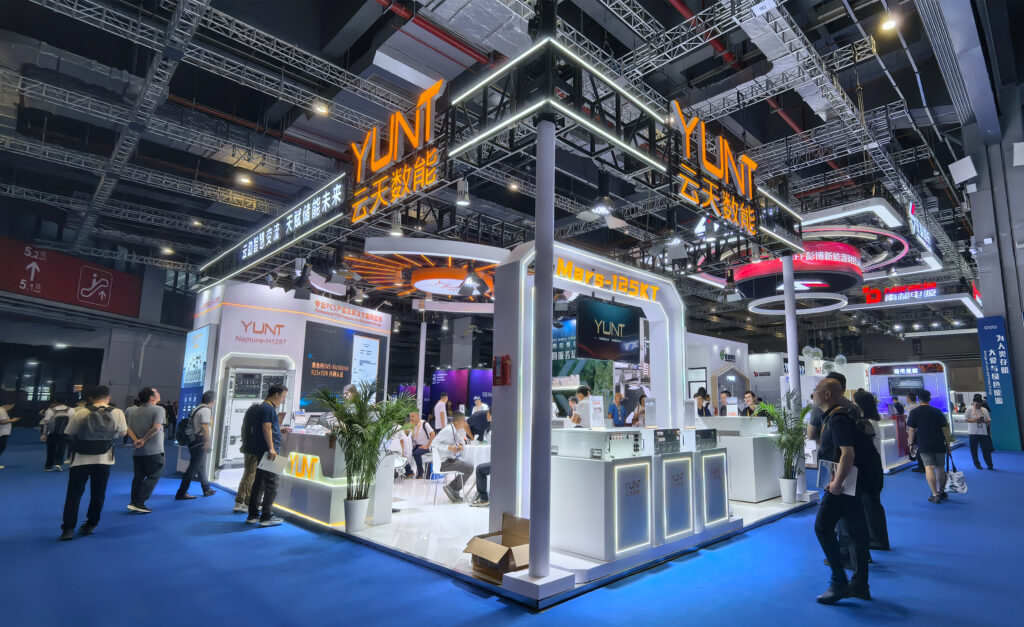
A concrete page-level anchor is the Neptune-H125KT listing. It describes a microgrid hybrid energy storage inverter with stated power options of 125kW, 250kW, 375kW, 500kW, 750kW, and 1000kW, plus a maximum system capacity of 2MW. The same passage says that the ESS inverter connects and manages multiple power sources and supports versatile operating modes for commercial and industrial energy storage. These details are useful for framing questions about scope. They apply to the statement and product/application scope on that official page; they do not establish performance or suitability beyond that scope.
The broader term energy storage inverter can also cover different device descriptions. Another captured page describes a modular bidirectional DC-AC energy storage converter with a 50kW to 225kW range and support for PQ, VF, and VSG operating modes. The practical lesson is not that the two ranges can be combined. Instead, record them as separate page-level entries, tied to their named descriptions, until the technical discussion establishes how they relate to the planned system.
Use evidence carefully during supplier screening
A useful comparison sheet should have separate fields for stated evidence, project relevance, and unresolved questions. In the evidence field, copy the product name, scope, range, and operating modes as presented. In the relevance field, explain why the item may matter to the project. In the question field, identify what still needs a direct technical answer. This structure keeps assumptions from becoming accidental facts.
Teams should also distinguish a company-level description from a product-level specification. The captured company description presents YUNT Power as an energy storage inverter company specializing in power electronics for commercial and industrial energy storage, with stated focus areas that also include residential and grid-side applications. That can inform an initial supplier profile. It should not be used to assign the Neptune-H125KT specification to every product or application.
- Record the named product or device description before using a stated power range in the brief.
- Keep commercial and industrial, residential, and grid-side application descriptions separate from model-specific specifications.
- Log market-position and trust statements as page claims without extending them into unsupported certification or suitability conclusions.
Claims about market position or trust deserve the same discipline. A page headline states “Top 4 in C&I ESS PCS Shipments (100–125kW), 2025,” while another states “Globally Certified & Trusted by Top Energy Projects.” These are page claims that may be logged as source text during research. They should not be expanded into conclusions about certification, project outcomes, or technical suitability when the captured evidence does not provide those details.
Turn open points into the next technical discussion
The final research output should be short enough for an engineering or sourcing meeting. Include the intended application, the relevant page evidence, the questions that remain open, and the boundaries on what the evidence supports. Ask the supplier to respond against the same product name and use case described in the brief. This makes later answers easier to compare and reduces the risk of mixing portfolio language with model-specific information.
Before moving from research to a formal evaluation, review the brief for four common errors: a range copied without its product context, an application claim extended to another use, an operating mode treated as a complete system description, or a company statement presented as proof of a particular model’s capability. Correcting those errors early improves the quality of the next discussion without requiring unsupported conclusions.
A defensible early brief does not need to declare a winner. It needs to show how the team reached its questions and which statements came directly from the page. By keeping scope, specifications, and assumptions distinct, YUNT can be considered within a clearer evidence-led process rather than through a generalized supplier claim.