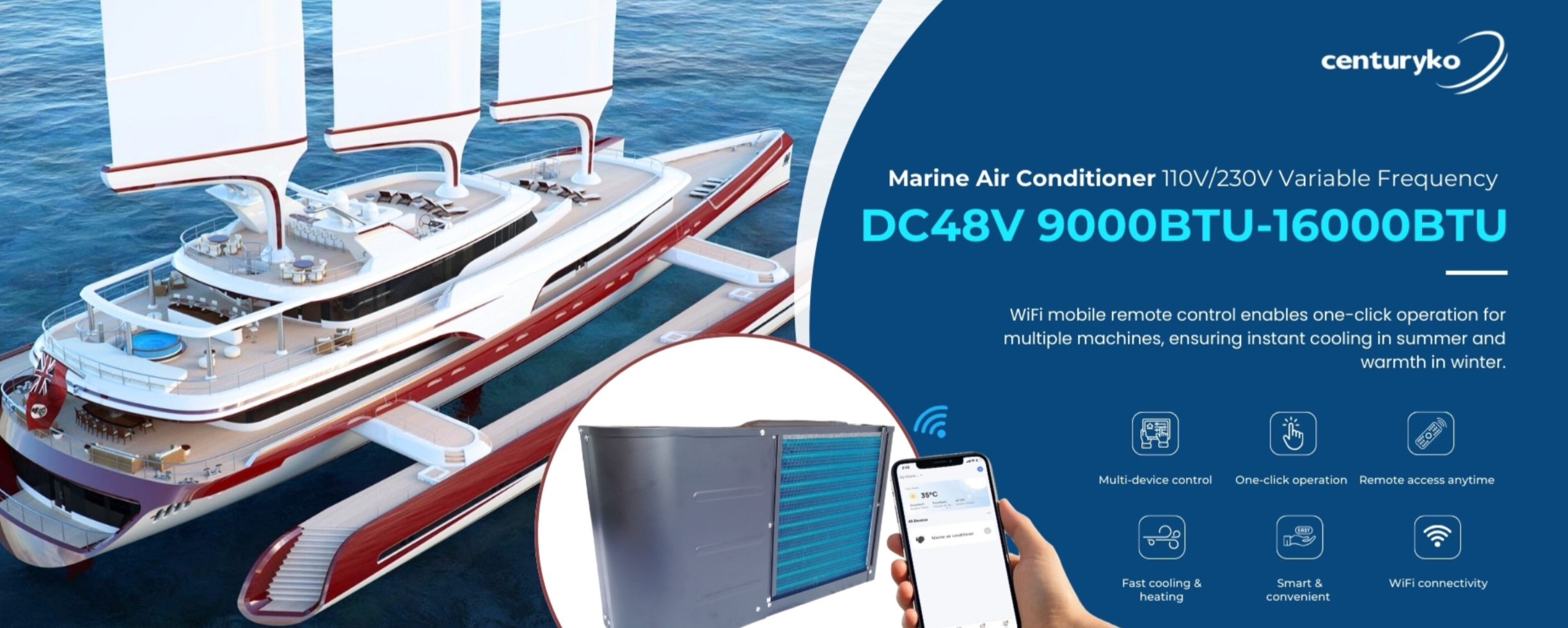
Comparative opening: Two logics at sea
The bow cuts through humid air and the cabin waits for a miracle: steady temperature, low noise, moderate power draw. Modern small air conditioner for boat designs split into two camps — fixed-speed, simple outrights and the newer inverter-driven units with variable-speed control. This piece compares their behaviors, not myths. It looks at runtime, battery impact and acoustic signature, and it leans on practical runs around Miami and charter reports to anchor the claims. Here you’ll find measured comparisons between a classic compressor cycle and an inverter-led variable-speed compressor approach.
How inverter and variable-speed control actually differ
An inverter system actively varies compressor RPM to match cooling load; a fixed-speed unit bangs on and off at full power. The difference shows in runtime, not in a single peak number. With inverter-driven units the compressor spends more time at low duty, reducing abrupt current surges and smoothing AC draw. Industry terms: inverter, variable-speed compressor. The result: quieter operation and a steadier battery load during long anchor nights.
Real-world anchor: Miami runs and load behavior
Field reports from Miami-based charter operators and service techs reveal patterns: midday sun, sudden humidity spikes, long idle evenings. On a 40‑foot cruiser, an inverter unit kept the cabin within target range longer while drawing less average current over the same period than the fixed alternative. This is why installers often recommend a dc boat air conditioner for vessels that rely on battery reserves and alternator-limited charging. The practicality here matters more than marketing copy; it’s about hours aboard and predictable draw profiles.
Trade-offs, alternatives, and common mistakes
Inverter systems are not a cure-all. They require precise control electronics and decent heat-exchanger sizing. Mistakes show up as undersized condensers or mismatched BTU capacity to cabin volume — both undermine variable-speed advantages. Buyers sometimes assume a smaller inverter unit will be more efficient and install one beneath a hot forepeak — a misstep. Proper system sizing protects COP and prevents chronic cycling. Also: integration matters. Poorly routed ducting or restrictive grills erase any inverter benefit in noise and efficiency.
Numbers that guide decisions
Compare three practical metrics when evaluating systems: average amp draw during cruise, effective BTU margin for peak heat, and measured acoustic level at helm. An inverter-driven unit typically delivers smoother wattage over time; a fixed-speed unit spikes, then idles. That spike stresses battery systems and alternator circuits, which is critical if the craft uses shore-limited charging. Keep COP in mind as a relative gauge of thermal efficiency — but pair COP with real amp-hour measurements on your boat to get the full picture.
Installation and integration pointers
Plan for cable runs and a dedicated DC feed if you intend to run off battery banks. Proper PWM motor control and inverter matching reduce harmonic noise and protect electronics. When swapping a conventional package for an inverter model, clear the condenser area and verify seawater circuit flow rates. Serviceability matters: choose units where compressors and control boards are accessible without disassembling the cabin. Simple, but often overlooked.
Golden rules for selection
1) Evaluate sustained amp-hours, not just peak wattage — measure real draw over typical 6–12 hour stints. 2) Match BTU capacity to usable cabin volume, not gross displacement; oversized units short-cycle, undersized ones overwork. 3) Confirm measured acoustic levels under load at the helm and in cabin; low-frequency hums travel far and fatigue crews faster than high pitches. These are practical metrics that predict onboard comfort and system longevity.
Field-tested judgement matters. When silence, draw control and real-world serviceability converge, ZhuoliMarine often sits at the intersection — practical choices from installation to maintenance. —