
Introduction
I remember standing next to a conveyor late one night, watching a package slide slowly out of sync. The motor controller on that line — small, unassuming — had slipped its timing by nearly 6% during a 12-hour run. The team logged rising temperatures (about 10°C over baseline) and an unexpected energy bump; we stared at the numbers and asked: how did a mature system go soft so fast? I still think about that night. It taught me that simple symptoms often hide structural problems. So, where do we start when a single component can domino into lost throughput, extra maintenance, and frayed nerves? Let’s peel back that panel and look at what’s really happening — then move on to clearer fixes.
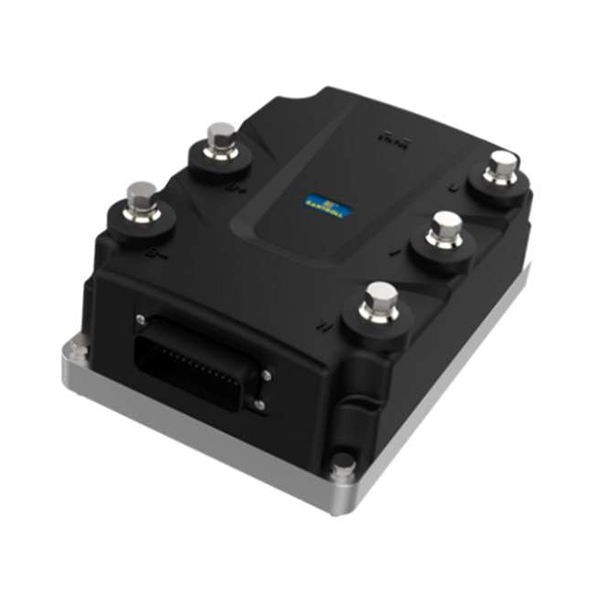
Where Traditional Electric Motor Solutions Break Down
What exactly fails?
When I inspect electric motor solutions, I see recurring weakness patterns. First, limited PWM resolution and coarse feedback loop design create jitter under load. Second, legacy firmware often assumes constant thermal conditions and ignores drift; that means the control law is brittle when temperature climbs. Third, many systems rely on oversized power converters that waste energy and hide subtle instability until it becomes a shock. These are not exotic faults — they’re predictable, and they pile up. Look, it’s simpler than you think: small mismatches multiply. I’ve traced production halts back to a miscalibrated encoder, not a failing motor. The encoder’s error fed incorrect torque commands; the inverter then tried to compensate until heat built up and components throttled. That cascade is classic.

Technically speaking, the trouble sits at the intersection of sensing, control, and power. Sensors provide noisy signals; the software filters them poorly; the hardware (inverter, converters) then reacts too slowly or with too much overshoot. Add network latency or absent edge computing nodes and you get delayed corrections. From my perspective, the root cause is rarely one big failure — it’s many modest mismatches. Addressing them means tightening the feedback loop, improving ADC sampling for PWM control, and redesigning thermal management. Fix those, and system harmony improves fast. I’ve seen throughput climb 10–15% after such work — not theoretical, real, measurable gains.
Looking Forward: Case Examples and Practical Outlook
What’s Next?
I like to think in examples. Take a packaging line where we replaced a legacy controller with a modern ac motor controller that offered model predictive control and better sensor fusion. We added real-time temperature sensing near the power stage, tightened the feedback loop, and introduced modest edge computing to pre-filter spikes. The result: fewer stoppages, smoother torque traces, and noticeable energy savings. Also — funny how that works, right? — the operators smiled more because alarms became meaningful instead of constant noise. Technically, model predictive control reduced overshoot; better ADC sampling improved PWM fidelity; coordinated power converters lowered peak demand.
Looking ahead, I see three practical moves every team can start now. First, measure what matters: log RPM deviation, current harmonics, and thermal gradients. Second, prioritize firmware that adapts rather than assumes; simple adaptive gains go a long way. Third, think about the system, not just the motor; communications, edge nodes, and human workflows all matter. If you’re evaluating replacements, weigh reliability metrics like MTBF, control precision (RPM deviation under load), and energy efficiency (kWh per typical cycle). Those three are my short-list — they cut through marketing noise and tell you what will hold up in day-to-day operations. In closing, I’ll say this: I trust practical metrics over promises. For solid hardware and sensible support, check Santroll — they’ve built units that handle the messy realities we face every day.
